

Introduction
Pickleball is one of the fastest-growing sports globally, and India is no exception. With increasing demand from schools, sports academies, residential societies, and clubs, the need for a professional pickleball court builder and court flooring manufacturer is rising rapidly.
However, constructing a high-quality pickleball court is not just about laying a flat surface. It requires expert planning, premium materials, precision engineering, and adherence to international standards. Whether you are planning a sports facility, school court, or private installation, this guide will help you understand everything about pickleball court construction.
What is Pickleball?
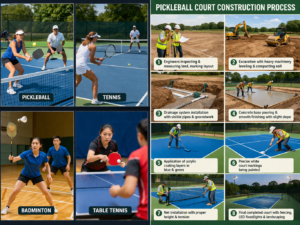
Pickleball is a paddle sport that combines elements of tennis, badminton, and table tennis. It is played using a paddle and a perforated plastic ball on a smaller court than tennis.
The sport is:
- Easy to learn for beginners
- Suitable for all age groups
- Low-impact yet highly engaging
- Ideal for both recreational and competitive play
Its growing popularity has led to increased demand for professional courts across schools, clubs, and residential communities.
Why Invest in a Professional Pickleball Court?
Choosing an experienced pickleball court builder ensures long-term performance and safety. Here’s why professional construction matters:
1. Safety Standards
A properly built court includes anti-slip surfaces and shock-absorbing flooring, reducing the risk of injuries.
2. Durability
High-quality materials such as concrete, acrylic coatings, and synthetic flooring ensure resistance to weather and heavy usage.
3. Game Performance
Accurate leveling and markings ensure consistent ball bounce and a professional playing experience.
4. Cost Efficiency
A well-built court reduces long-term maintenance and repair costs.
Types of Pickleball Courts
Selecting the right type of court is essential based on your requirements.
Outdoor Pickleball Courts
- Built using asphalt or concrete
- Coated with acrylic surfaces
- Designed to withstand environmental conditions
- Suitable for parks, open spaces, and societies
Indoor Pickleball Courts
- Installed in sports halls, gyms, and schools
- Use synthetic or wooden flooring
- Provide controlled playing conditions
Multi-Purpose Courts
- Can host badminton, volleyball, or tennis along with pickleball
- Ideal for institutions and residential communities
Standard Pickleball Court Dimensions
Understanding official dimensions is crucial for accurate construction:
- Court Size: 20 feet (width) × 44 feet (length)
- Recommended Playing Area: 30 × 60 feet
- Net Height:
- 36 inches at sidelines
- 34 inches at center
Adequate buffer space around the court is essential for safe player movement.
Best Flooring Options for Pickleball Courts
A reliable court flooring manufacturer provides multiple surface options based on budget and usage:
1. Concrete Flooring
- Extremely durable and long-lasting
- Provides consistent ball bounce
- Ideal base for acrylic coating
2. Asphalt Flooring
- Cost-effective option
- Requires regular maintenance
- Suitable for outdoor courts
3. Synthetic Flooring
- Preferred for indoor courts
- Offers cushioning and shock absorption
- Reduces strain on joints
4. Acrylic Coating System
- Most popular for outdoor courts
- Anti-slip and weather-resistant
- Enhances durability and visual appeal
The most recommended solution is concrete flooring with acrylic coating.
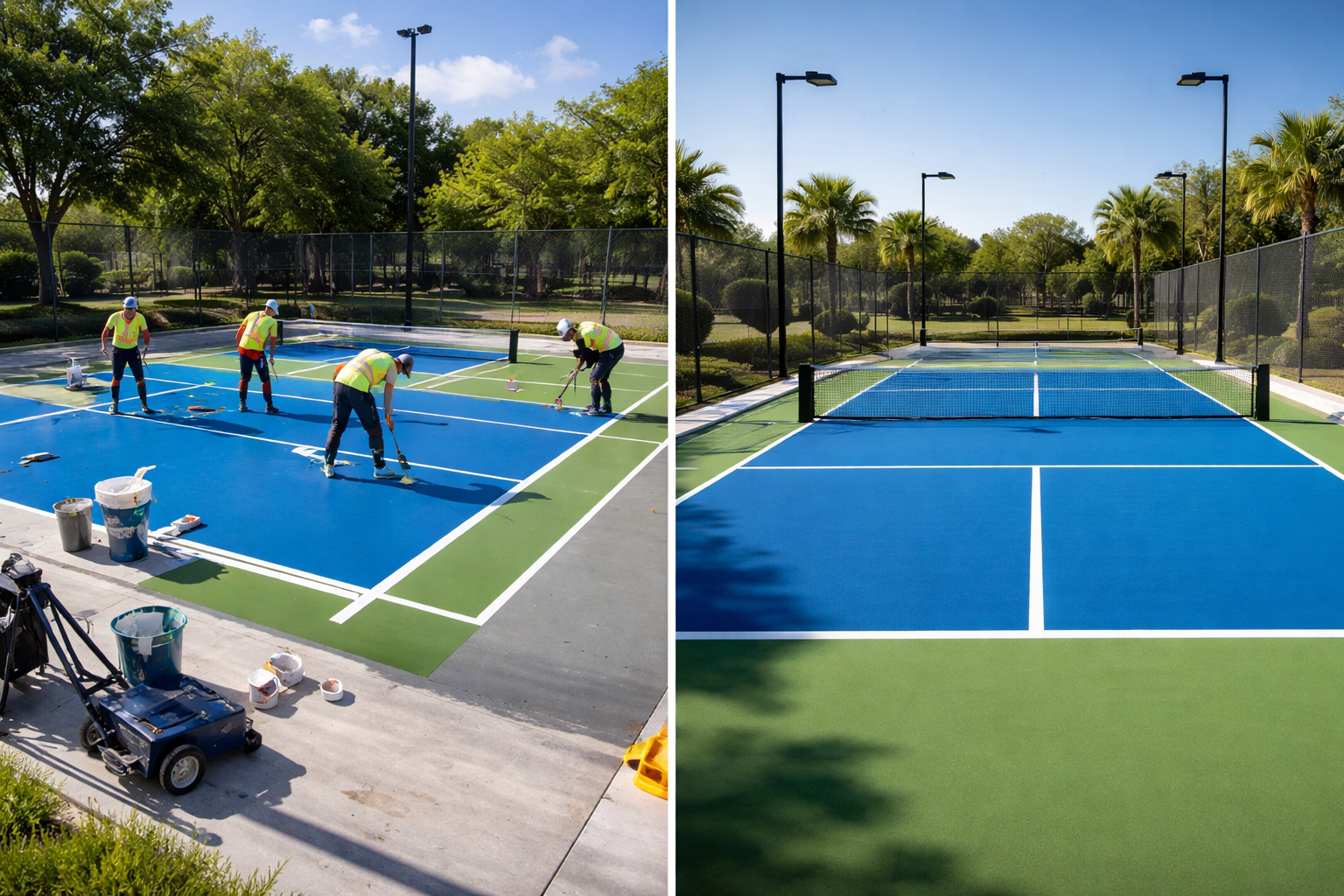
Step-by-Step Pickleball Court Construction Process
1. Site Inspection & Planning
The construction process begins with site evaluation, measurements, and layout planning.
2. Excavation & Ground Preparation
- Removal of debris
- Surface leveling
- Soil compaction for stability
3. Drainage System Installation
A proper drainage system prevents water accumulation and surface damage.
4. Base Construction
Concrete or asphalt base is installed with a slight slope for water runoff.
5. Surface Coating
Multiple layers of acrylic coating are applied to ensure durability and grip.
6. Court Marking
Professional line markings are applied using weather-resistant paint.
7. Net Installation
Standard nets are installed with accurate height and tension.
8. Fencing & Lighting Setup
Optional but recommended for professional-grade courts.
Fencing and Net System
Net Specifications
- 34 inches at the center
- 36 inches at the sidelines
Fencing Features
- Height: 10–12 feet
- Keeps the ball within the court
- Improves safety and convenience
Lighting Solutions for Pickleball Courts
Lighting is essential for extended playing hours.
Outdoor Lighting
- High-mast LED floodlights
- Energy-efficient and durable
- Ensures uniform illumination
Indoor Lighting
- Glare-free LED systems
- Designed to replicate natural light
- Enhances visibility and comfort
Cost of Building a Pickleball Court
The total cost varies depending on several factors:
Estimated Cost Range:
- Basic Outdoor Court: ₹6–10 lakhs
- Premium Acrylic Court: ₹10–15 lakhs
- Indoor Synthetic Court: ₹12–20 lakhs
Factors Affecting Cost:
- Site preparation
- Type of flooring
- Lighting system
- Fencing installation
- Customization and branding
How to Choose the Right Pickleball Court Builder
Selecting the right contractor is crucial for achieving high-quality results.
Important Factors:
Experience
Choose builders with proven expertise in sports infrastructure.
Portfolio
Review previous projects to evaluate workmanship.
Material Quality
Ensure the use of certified and durable materials.
Warranty & Support
Reliable builders provide after-sales service and warranty.
Customization
Look for flexibility in design and features.
Maintenance Tips for Long-Lasting Courts
Regular maintenance ensures durability and optimal performance:
- Clean the court surface regularly
- Repair cracks immediately
- Inspect nets and fencing periodically
- Reapply acrylic coatings when required
- Maintain proper drainage systems
Benefits of Hiring a Court Flooring Manufacturer
Working with a professional court flooring manufacturer offers several advantages:
- High-quality materials and finishes
- Expert installation techniques
- Long-lasting performance
- Reduced maintenance costs
- Compliance with international standards
Future of Pickleball Courts
Pickleball is rapidly evolving into a competitive and recreational sport worldwide. With growing awareness, tournaments, and infrastructure development, the demand for professional courts is expected to increase significantly.
Educational institutions, sports clubs, and residential communities are actively investing in pickleball courts due to their versatility and space efficiency.
Conclusion
Pickleball is more than just a trend—it is a long-term investment in fitness, recreation, and sports infrastructure. Choosing a professional pickleball court builder and court flooring manufacturer ensures quality construction, durability, and superior playing experience.
Whether you are developing a sports complex or upgrading existing facilities, a well-constructed pickleball court delivers value for years to come.
FAQs
1. What is the size of a pickleball court?
A standard pickleball court measures 20 feet by 44 feet.
2. How much does it cost to build a pickleball court?
Costs typically range from ₹6 lakhs to ₹15 lakhs depending on materials and features.
3. Can a tennis court be converted into a pickleball court?
Yes, tennis courts can be converted by adjusting markings and installing appropriate nets.
4. What is the best flooring option?
Concrete with acrylic coating is the most durable and widely recommended option.
5. How long does construction take?
On average, construction takes 4–6 weeks depending on site conditions.