



Introduction
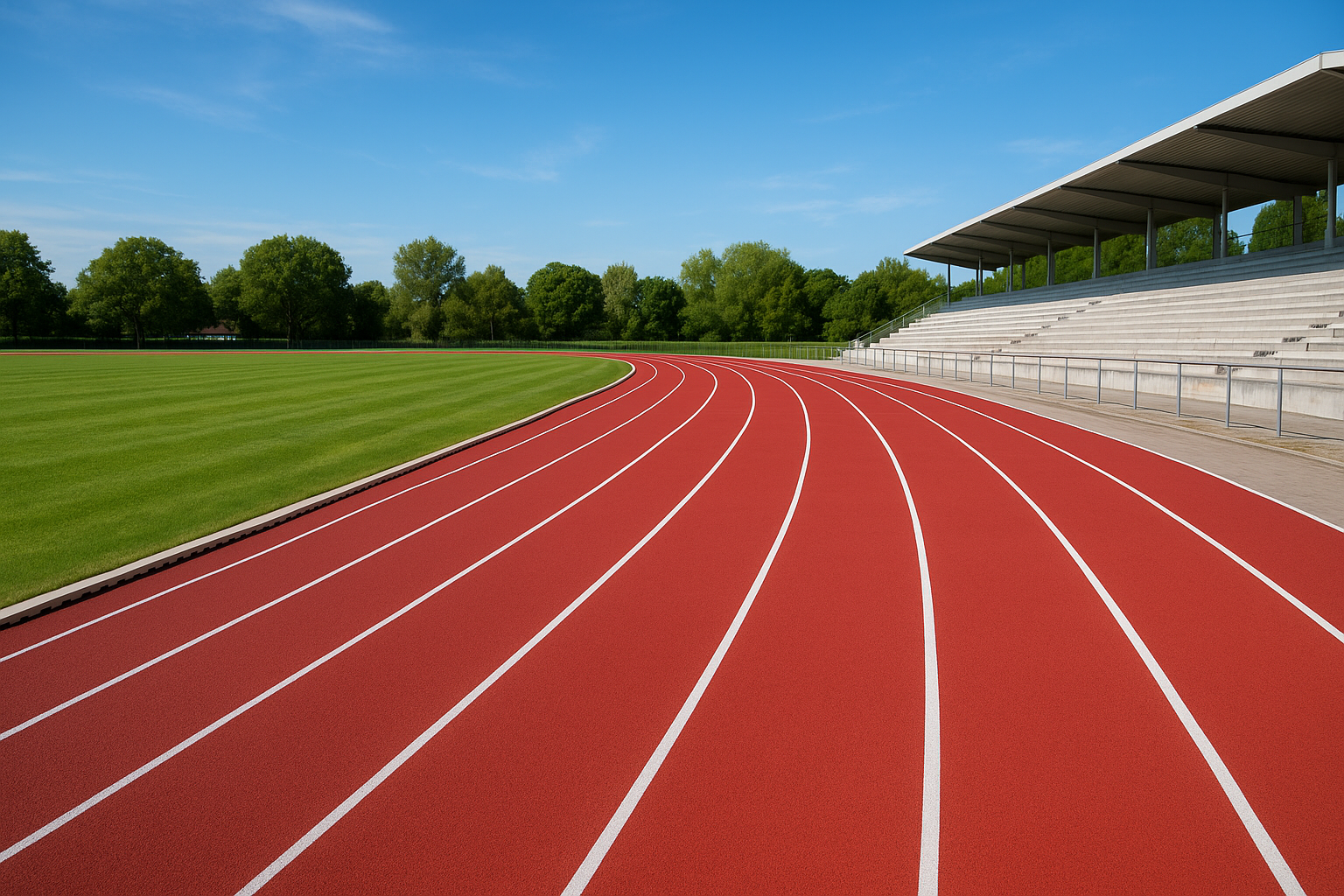
Running tracks are the heartbeat of athletic performance, providing athletes with a reliable and safe surface to train and compete on. Over the years, innovations in surface technology have changed the way tracks are designed. Among these, the sandwich system running track has emerged as a popular choice because of its durability, performance, and cost-effectiveness.
What is the Sandwich System Running Track?

The sandwich system is a high-performance running track construction technique that combines an elastic base mat with polyurethane layers and EPDM granules. The name “sandwich” comes from its layered structure, where different materials are stacked to create an elastic yet firm surface.
Unlike spray coat or prefabricated tracks, the sandwich system provides superior performance with enhanced shock absorption and slip resistance.
Key Features of the Sandwich System
- Durability – Designed to withstand years of use without losing elasticity.
- Shock Absorption – Reduces stress on athletes’ joints, making training safer.
- Slip Resistance – The EPDM granule surface provides excellent grip.
- Aesthetic Appeal – Available in various colors, most commonly red or blue.
Materials Used in Sandwich System Tracks
- Base Layer Materials – Asphalt or concrete base to provide stability.
- Elastic Layer – Made from recycled rubber granules bound with polyurethane.
- Polyurethane Coatings – Provide waterproofing and durability.
- EPDM Granules – Broadcasted on top for grip, elasticity, and color.
Step-by-Step Construction Process
- Site Preparation – Leveling and compacting soil, creating a drainage system.
- Base Construction – Laying asphalt or concrete as the foundation.
- Elastic Base Mat Installation – Applying a mixture of rubber granules and polyurethane.
- First Polyurethane Layer – Coating to bind the base and provide sealing.
- Broadcasting EPDM Granules – Evenly spreading colored EPDM granules for texture and grip.
- Final Sealing Layer – Ensures granules are firmly fixed and the surface is weather-resistant.
Thickness and Design Specifications
- Standard thickness: 13–15 mm for athletic use.
- Must comply with World Athletics/IAAF guidelines for professional competitions.
- Line markings are added with special paint resistant to UV and wear.
Advantages of Sandwich System Running Tracks
- Enhances athlete safety with shock-absorbing layers.
- Provides excellent traction in all weather conditions.
- Lasts longer compared to spray coat systems.
- Requires less maintenance compared to natural tracks.
Comparison with Other Track Systems
- Sandwich vs. Full PU – Full PU is more expensive, while sandwich offers similar performance at a lower cost.
- Sandwich vs. Spray Coat – Spray coat is cheaper but less durable; sandwich lasts longer.
- Sandwich vs. Prefabricated – Prefabricated is faster to install, but sandwich provides better customization.
Applications of Sandwich System Tracks
- Schools & Colleges – Safe and affordable for young athletes.
- Stadiums – Suitable for professional competitions.
- Training Centers – Provides high-performance surface for elite athletes.
- Recreational Facilities – Long-lasting and low maintenance for community use.
Maintenance Requirements
- Regular Cleaning – Remove dirt and leaves to prevent surface damage.
- Recoating – Every 6–8 years to maintain grip.
- Repair – Minor cracks or surface issues can be repaired with polyurethane fillers.
Cost of Sandwich System Running Track Construction
- Cost Factors – Base type, track size, material quality, and location.
- Average Cost – Ranges between ₹1,200 to ₹2,000 per square meter in India, depending on specifications.
Environmental Impact
- Uses recycled rubber granules for base layers.
- Long lifespan reduces material wastage.
- EPDM and PU materials are recyclable, making the system eco-friendly.
Common Mistakes to Avoid in Construction
- Skipping proper base preparation, leading to cracks.
- Using low-quality granules or PU, reducing durability.
- Hiring inexperienced contractors, causing uneven surfaces.
Choosing the Right Contractor
- Look for companies with experience in sports infrastructure.
- Check certifications and compliance with World Athletics standards.
- Ask for warranty and maintenance support to ensure long-term performance.
Future of Running Track Construction
The future is moving toward smart tracks with built-in sensors to track athlete performance. Additionally, eco-friendly binders and granules are expected to reduce the environmental footprint of track construction.
Conclusion
The sandwich system running track is an excellent choice for schools, stadiums, and training facilities looking for a balance of performance, durability, and cost-effectiveness. With its layered structure, it ensures athlete safety, long-term use, and minimal maintenance. If constructed by professionals with the right materials, it can serve athletes for decades.
FAQs
Q1. What is the lifespan of a sandwich system running track?
A well-maintained track can last 10–15 years before requiring major refurbishment.
Q2. Can sandwich system tracks be used in all weather conditions?
Yes, they are weather-resistant and perform well in both rain and heat.
Q3. Is the sandwich system track suitable for professional competitions?
Absolutely, if constructed according to World Athletics standards.
Q4. How long does it take to build a sandwich system track?
On average, 6–10 weeks, depending on size and site conditions.
Q5. Can the track color be customized?
Yes, EPDM granules come in multiple colors, though red and blue are most common.