
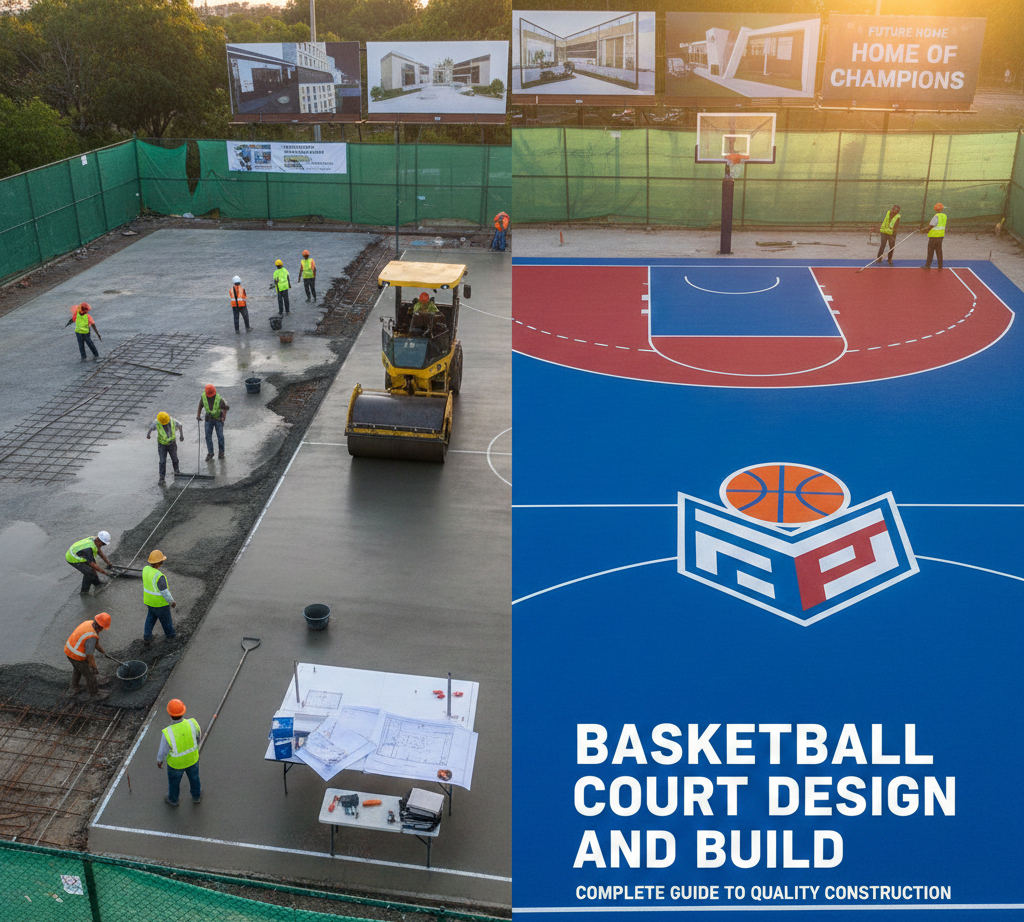
Designing and building a basketball court is a significant investment that requires careful planning, technical expertise, and quality materials. Whether you are constructing a professional indoor arena, a school playground court, a residential backyard court, or a community sports facility, the success of your project depends on proper design, structural integrity, and long-term durability.
This complete guide will walk you through basketball court design standards, surface options, construction process, cost considerations, and maintenance practices to ensure a high-performance and long-lasting court.
1. Understanding Basketball Court Dimensions and Standards
Before starting construction, it is essential to determine the type of court you want to build. Court dimensions vary depending on the level of play.
Standard Court Sizes
-
NBA Court Size: 94 feet × 50 feet
-
FIBA Court Size: 28 meters × 15 meters
-
High School Court Size: 84 feet × 50 feet
-
Half Court Size: Approximately 47 feet × 50 feet
In addition to court dimensions, you must consider:
-
Boundary lines and markings
-
Three-point line radius
-
Free-throw lane dimensions
-
Run-off space around the court
Professional facilities require precise measurements and compliance with governing body regulations. For schools and residential courts, flexibility in size is possible, but maintaining correct proportions ensures better gameplay.
2. Site Selection and Ground Preparation
The foundation of a basketball court determines its durability and performance. Poor ground preparation can result in cracks, uneven surfaces, and drainage problems.
Site Evaluation
Before construction begins, assess:
-
Soil condition and stability
-
Drainage capability
-
Level of the ground
-
Sunlight exposure (for outdoor courts)
-
Accessibility and surrounding structures
Excavation and Base Preparation
The construction process typically involves:
-
Clearing and leveling the site
-
Excavation to required depth
-
Laying a compacted sub-base (usually crushed stone)
-
Installing proper drainage systems
A well-compacted base prevents surface settlement and structural damage over time.
3. Choosing the Right Basketball Court Surface
Selecting the correct surface material plays a major role in performance, player safety, and maintenance requirements.
Concrete Courts
Concrete is commonly used for outdoor basketball courts. It is durable, cost-effective, and long-lasting. However, it can be hard on joints if not properly coated.
Asphalt Courts
Asphalt provides a slightly softer surface than concrete and is often used in schools and parks. It requires periodic resurfacing but offers good performance.
Acrylic Sports Flooring
Acrylic coating systems are applied over concrete or asphalt. They provide:
-
Slip resistance
-
Weather resistance
-
Enhanced ball bounce
-
Customizable colors
This option is widely used for outdoor professional courts.
Modular Sports Tiles
Interlocking sports tiles are popular for residential and training courts. They offer:
-
Shock absorption
-
Quick installation
-
Easy replacement
-
Low maintenance
Wooden Flooring (Indoor Courts)
For indoor professional courts, hardwood flooring such as maple is the standard choice. It provides excellent ball response and player comfort.
4. Drainage and Slope Design
Proper drainage is essential, especially for outdoor basketball courts. Water accumulation can damage the surface and create safety hazards.
A slight slope (typically 1%) is designed to allow water runoff without affecting gameplay. Additionally, perimeter drainage systems may be installed to prevent water pooling around the court.
5. Court Markings and Customization
Accurate court markings are critical for professional gameplay.
Standard Markings Include:
-
Center circle
-
Free throw lane
-
Three-point arc
-
Baseline and sidelines
-
Key area
High-quality line marking paint ensures durability and visibility. Custom logos, team branding, and color combinations can enhance the visual appeal of the court.
6. Basketball Equipment Installation
A complete basketball court includes high-quality equipment that meets safety standards.
Key Components:
-
Basketball hoops and rims
-
Backboards (glass, acrylic, or polycarbonate)
-
Support poles (fixed or portable systems)
-
Net systems
For professional courts, tempered glass backboards are recommended for superior rebound performance.
7. Lighting System for Basketball Courts
Proper lighting is crucial for indoor and outdoor courts, especially for evening games.
Lighting Considerations:
-
LED sports lighting for energy efficiency
-
Uniform light distribution
-
Glare reduction
-
Compliance with sports lighting standards
High-mast LED lighting systems are commonly used in outdoor facilities.
8. Safety Features and Accessories
Safety is a priority in basketball court construction.
Important Safety Additions:
-
Pole padding
-
Wall padding (for indoor courts)
-
Anti-slip surface coating
-
Protective fencing (for outdoor courts)
Fencing prevents ball loss and improves security, especially in public or residential settings.
9. Basketball Court Construction Process – Step by Step
Here is a simplified overview of the construction process:
-
Planning and design approval
-
Site preparation and excavation
-
Sub-base compaction
-
Concrete or asphalt laying
-
Curing period
-
Surface coating application
-
Line marking
-
Equipment installation
-
Final inspection and testing
The timeline can range from 2 to 6 weeks depending on project size and complexity.
10. Cost of Building a Basketball Court
The cost of basketball court construction varies depending on location, materials, and specifications.
Key Cost Factors:
-
Court size
-
Surface material
-
Drainage system
-
Lighting installation
-
Equipment quality
-
Labor charges
Residential half courts are generally more affordable, while professional indoor courts require a higher budget due to flooring and lighting systems.
11. Maintenance and Longevity
Regular maintenance extends the life of your basketball court.
Maintenance Tips:
-
Clean debris regularly
-
Inspect for cracks or surface damage
-
Reapply acrylic coating when required
-
Tighten and inspect hoop systems
-
Check drainage performance
Outdoor courts may need resurfacing every 4–8 years depending on usage and climate conditions.
12. Why Quality Construction Matters
Investing in professional basketball court design and construction ensures:
-
Consistent ball bounce
-
Player safety
-
Long-term durability
-
Reduced maintenance costs
-
Professional appearance
A poorly constructed court can lead to injuries, structural damage, and costly repairs.
Conclusion
Building a basketball court is more than just laying concrete and installing hoops. It requires careful planning, precise measurements, proper surface selection, and expert construction techniques. Whether you are developing a school sports facility, a community recreation center, or a private residential court, prioritizing quality materials and professional installation guarantees a safe and high-performance playing surface.
Frequently Asked Questions (FAQ) – Basketball Court Design and Construction
1. What is the standard size of a basketball court?
The standard NBA basketball court size is 94 feet × 50 feet, while FIBA courts measure 28 meters × 15 meters. High school courts are typically 84 feet × 50 feet. Half courts are usually around 47 feet × 50 feet, depending on available space.
2. How much space is required to build a basketball court?
In addition to the actual playing area, you should allow extra run-off space around the court for safety. Ideally, at least 3–10 feet of clearance on all sides is recommended. For professional facilities, more clearance may be required to meet regulations.
3. What is the best surface for an outdoor basketball court?
The most common outdoor surfaces include:
-
Concrete – Durable and long-lasting
-
Asphalt – Cost-effective and slightly softer than concrete
-
Acrylic sports coating – Weather-resistant and slip-resistant
-
Modular tiles – Shock-absorbing and low maintenance
Acrylic-coated concrete is widely preferred for professional outdoor courts.
4. Which flooring is ideal for indoor basketball courts?
Hardwood maple flooring is considered the best choice for professional indoor courts due to its excellent ball bounce, durability, and player comfort.
5. How long does it take to build a basketball court?
Construction time typically ranges from 2 to 6 weeks, depending on court size, surface type, weather conditions, and customization requirements.
6. What is the average cost of building a basketball court?
Costs vary based on location, materials, and features. A residential half court is generally more affordable, while full-size professional courts with lighting and fencing require a higher investment. Factors such as drainage, surface type, and equipment quality significantly affect pricing.
7. Do outdoor basketball courts need drainage systems?
Yes, proper drainage is essential to prevent water accumulation, surface damage, and safety hazards. Courts are usually designed with a slight slope (around 1%) to allow water runoff.
8. How often does a basketball court need maintenance?
Regular cleaning is recommended weekly or monthly depending on usage. Outdoor courts may require resurfacing every 4–8 years, while indoor courts may need periodic refinishing to maintain performance.
9. What type of basketball hoop is best?
For professional and school courts, tempered glass backboards with fixed in-ground systems are recommended. For residential use, portable or adjustable hoop systems are popular choices.
10. Can a basketball court be customized?
Yes, basketball courts can be customized with:
-
Team logos
-
Custom colors
-
Multi-sport markings
-
Branded designs
-
LED lighting systems
Customization enhances both appearance and functionality.