
Introduction
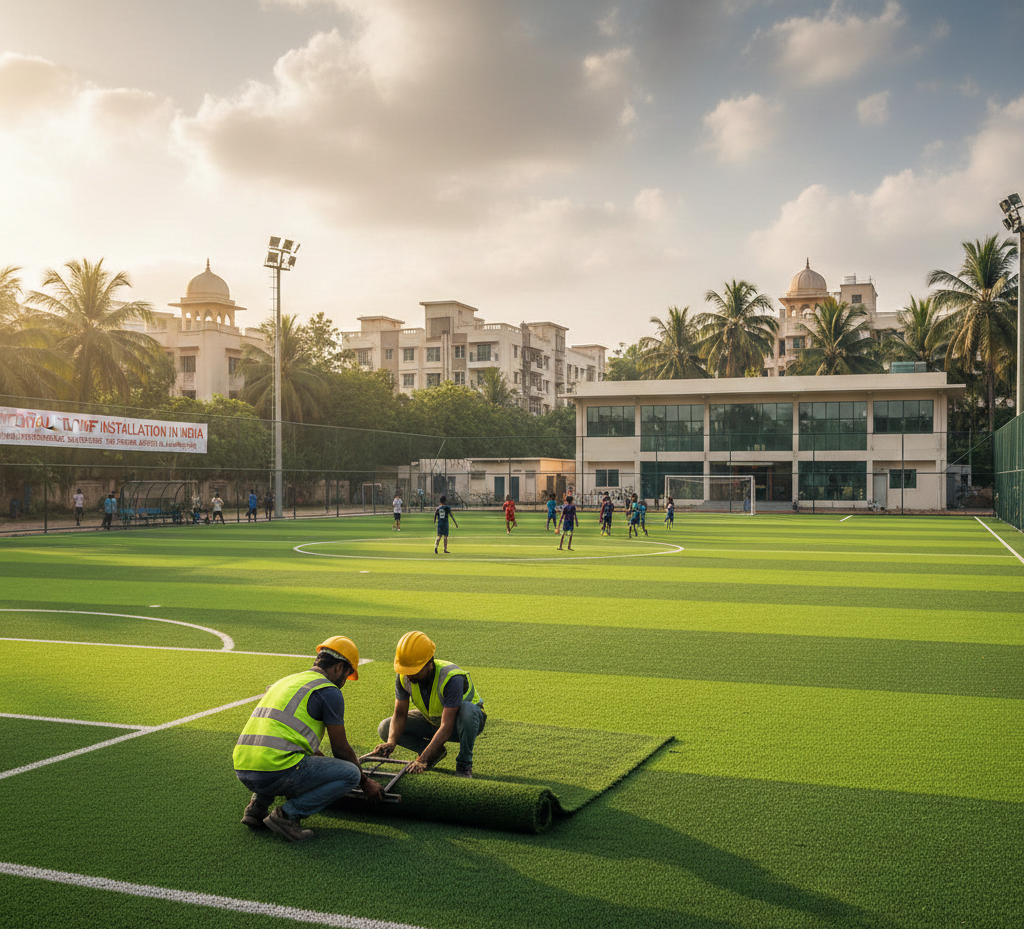
Artificial turf installation in India has revolutionized the way sports facilities, landscapes, and recreational spaces are designed and maintained. Once considered an alternative solution, synthetic grass has now become a preferred surface choice across the country due to its durability, cost efficiency, and consistent performance. From football and cricket grounds to rooftops, balconies, schools, hotels, gyms, and commercial properties, artificial turf delivers a reliable green surface where natural grass often fails.
India’s diverse climate—ranging from intense summer heat to heavy monsoons—makes natural grass difficult and expensive to maintain. Artificial turf eliminates these challenges by offering a low-maintenance, all-season surface that remains visually appealing and functional throughout the year. This guide explains everything you need to know about artificial turf installation in India, including benefits, turf types, installation steps, applications, and selection tips.
Why Artificial Turf Is in High Demand in India
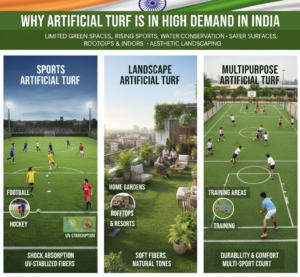
The growing popularity of artificial turf in India is driven by both environmental and practical factors. Natural grass requires constant care, water supply, fertilizers, pesticides, and regular maintenance—resources that are increasingly scarce and costly.
Key reasons behind the rapid growth of artificial turf in India include:
-
Limited availability of large green spaces in urban areas
-
Rising popularity of sports such as football, cricket, futsal, and hockey
-
High water consumption associated with natural grass
-
Demand for consistent, injury-safe playing surfaces
-
Increased use of rooftops and indoor areas for recreation
-
Growing commercial demand for aesthetic landscaping
With global-standard turf systems now available locally, artificial grass has become one of the fastest-growing surface solutions in India.
Types of Artificial Turf Available in India
Different environments and activities require different turf specifications. Choosing the right type is essential for performance and longevity.
1. Sports Artificial Turf
Sports turf is engineered for high-impact and high-traffic activities such as football, cricket, hockey, futsal, rugby, kabaddi, and multisport training.
Key Characteristics:
-
High-density polyethylene (PE) or polypropylene (PP) fibers
-
Advanced shock absorption systems
-
Sand and rubber infill for stability and cushioning
-
UV-stabilized fibers for Indian weather
-
Compliance with international sports standards
This type of turf ensures consistent ball behavior, traction, and player safety.
2. Landscape Artificial Turf
Landscape turf is designed primarily for visual appeal and comfort rather than intense sports activity. It is widely used in residential and commercial settings.
Common Uses:
-
Home gardens and lawns
-
Villas and farmhouses
-
Hotels and resorts
-
Terraces, balconies, and rooftops
-
Cafés and outdoor seating areas
Landscape turf features soft fibers, natural color tones, excellent drainage, and minimal infill requirements.
3. Multipurpose Artificial Turf
Multipurpose turf offers a balance between durability and comfort, making it suitable for schools, clubs, and community spaces.
Applications Include:
-
School playgrounds
-
Recreational parks
-
Training areas
-
Multi-sport courts
This turf type supports various activities while maintaining reasonable shock absorption and surface stability.
Step-by-Step Artificial Turf Installation Process in India
Professional installation is crucial for achieving long-term performance and safety. Reputed turf installers in India follow a systematic process:
1. Site Inspection and Planning
The installation begins with a detailed site assessment, including surface condition, slope, drainage, soil strength, and intended usage. Based on these factors, the appropriate turf type and base system are selected.
2. Base Preparation
A strong foundation is essential for turf durability. Base preparation typically involves:
-
Clearing existing grass, debris, or flooring
-
Leveling the surface
-
Installing a compacted crushed stone or aggregate base
-
Ensuring proper slope for water drainage
For rooftops or indoor spaces, specialized base systems may be used.
3. Shock Pad Installation (Optional but Recommended)
Shock pads are especially important for sports turf. They improve player safety, reduce impact stress, and enhance overall comfort.
4. Turf Laying and Alignment
Turf rolls are laid carefully in the same fiber direction to ensure uniform appearance and performance. Precision cutting ensures perfect edge alignment.
5. Jointing and Seaming
Special jointing tapes and industrial adhesives are used to join turf sections seamlessly. Proper bonding prevents lifting, gaps, and uneven surfaces.
6. Infill Application
Infill enhances turf stability and performance:
-
Silica sand adds weight and support
-
Rubber granules improve shock absorption
-
Anti-microbial infills reduce odor and bacteria
The infill is evenly brushed into the fibers using mechanical equipment.
7. Final Brushing and Inspection
The surface is brushed, leveled, and inspected for drainage, grip, cushioning, and overall finish. Once approved, the turf is ready for use.
Benefits of Artificial Turf Installation in India
1. All-Season Usability
Artificial turf remains functional throughout the year, regardless of heat or rainfall.
2. Minimal Maintenance
No mowing, watering, fertilizers, or pesticides required—saving time and money.
3. Long Service Life
High-quality turf systems can last 8–12 years or more with proper care.
4. Consistent Performance
Uniform traction, grip, and ball response across the entire surface.
5. Environmentally Responsible
Significant water savings and elimination of harmful chemicals.
6. Quick Installation
Most projects are completed within a few days.
7. Indoor and Outdoor Compatibility
Suitable for rooftops, gyms, balconies, and enclosed spaces.
Applications of Artificial Turf in India
Artificial turf is widely used across multiple sectors:
Sports & Education
-
Football and cricket turfs
-
Box cricket and futsal arenas
-
School playgrounds and academies
Commercial & Hospitality
-
Hotels and resorts
-
Event venues and exhibition areas
-
Restaurants and outdoor cafés
Residential
-
Home gardens and lawns
-
Terraces and balconies
-
Children’s play areas
-
Pet zones
How to Choose the Right Artificial Turf in India
When selecting artificial turf, consider the following factors:
-
Intended use (sports or landscaping)
-
Pile height and fiber density
-
Fiber material (PE for softness, PP for strength)
-
Infill type and requirement
-
UV resistance for Indian climate
-
Warranty period (preferably 6–8 years or more)
-
Shock pad inclusion for safety
-
Supplier reputation and certifications
Professional guidance ensures the right balance of performance, safety, and value.
Conclusion
Artificial turf installation in India has become a game-changer for sports infrastructure, landscaping, and modern recreational spaces. Its durability, low maintenance, year-round usability, and consistent performance make it an ideal alternative to natural grass in both urban and rural environments.
Whether you are planning a football field, cricket turf, school playground, rooftop lawn, or commercial landscape, artificial turf offers long-term value, visual appeal, and dependable performance. By choosing the right turf system and working with experienced installers, you can create a safe, attractive, and high-quality surface that remains green and functional for years to come.
Artificial Turf Installation in India – FAQ
1. What is artificial turf?
Artificial turf is a synthetic grass surface made from durable polyethylene or polypropylene fibers designed to replicate the appearance and performance of natural grass. It is widely used for sports fields, landscaping, playgrounds, and commercial spaces because it requires minimal maintenance and remains green throughout the year.
2. Where can artificial turf be installed?
Artificial turf can be installed in many locations, including:
-
Football grounds
-
Cricket practice pitches
-
Schools and playgrounds
-
Residential gardens
-
Terrace landscaping
-
Commercial landscapes
-
Indoor sports facilities
It provides a clean, durable, and visually appealing surface for both sports and landscaping purposes.
3. What is the cost of artificial turf installation in India?
The cost of artificial turf installation in India generally ranges from ₹70 to ₹250 per sq ft, depending on factors such as:
-
Turf quality and pile height
-
Base preparation work
-
Shock pad installation
-
Area size and project location
Sports turf installations may cost more due to specialized base layers and performance requirements.
4. How long does artificial turf last?
High-quality artificial turf typically lasts 8 to 15 years depending on usage, material quality, and maintenance. Sports fields may require replacement sooner due to heavy usage, while landscaping turf can last longer.
5. What is the installation process for artificial turf?
Artificial turf installation usually involves several steps:
-
Site preparation and ground leveling
-
Installation of compacted base layers
-
Laying of shock pad (if required)
-
Turf carpet installation and joining
-
Sand or rubber infill application
-
Final brushing and finishing
Proper installation ensures durability, drainage, and a natural-looking surface.
6. Is artificial turf safe for sports?
Yes, modern artificial turf systems are designed to be safe and comfortable for athletes. Many sports facilities use synthetic turf with shock-absorbing layers that reduce impact and improve player performance.
7. Does artificial turf require maintenance?
Artificial turf requires minimal maintenance compared to natural grass. Basic maintenance includes:
-
Brushing the fibers occasionally
-
Removing leaves and debris
-
Refilling sand or rubber infill when needed
-
Cleaning the surface periodically
This helps maintain the appearance and performance of the turf.