

|
Getting your Trinity Audio player ready...
|
Basketball is a fast-paced sport that requires constant movement, quick direction changes, sudden stops, jumping, and repeated landings. While players focus on improving their skills, speed, and performance, one important factor often determines their comfort and safety on the court: the quality of the basketball court flooring.
A professionally designed basketball court is more than just a playing surface with painted boundary lines. It must provide the right balance of grip, stability, flexibility, and shock absorption to support players during intense physical activity. Choosing the right basketball court flooring can make a significant difference in reducing physical stress, improving playing comfort, and creating a safer sporting environment.
Whether you are developing a basketball court for a school, sports academy, professional training facility, indoor stadium, or outdoor recreational area, safety and shock absorption should be among your top priorities.
In this guide, we will explore why shock absorption matters in basketball flooring, how the right sports flooring system supports player safety, and what factors you should consider when selecting the best basketball court flooring.
1. Understanding the Importance of Safety in Basketball Court Flooring
Basketball involves continuous physical movement. Players frequently jump for rebounds, sprint across the court, pivot to avoid opponents, and land after taking shots. These movements create repeated impact forces on the feet, ankles, knees, and other joints.
If the playing surface is too hard, uneven, slippery, or poorly installed, it may increase discomfort and create additional risks during gameplay.
A high-quality basketball court flooring system is designed to provide a consistent and reliable playing surface. It should offer sufficient traction, controlled flexibility, and appropriate impact management.
Important safety characteristics include:
- Slip resistance: Helps players maintain control while running, stopping, and changing directions.
- Shock absorption: Helps reduce the impact transmitted through the body during jumping and landing.
- Surface consistency: Provides predictable playing conditions across the entire court.
- Proper ball response: Supports consistent basketball bounce and playing performance.
- Durability: Maintains its functional properties under regular sports activity.
- Stable installation: Prevents unwanted movement, gaps, and uneven areas.
Investing in quality sports flooring is therefore an important part of creating a basketball facility that prioritises both player experience and long-term usability.
2. What Is Shock Absorption in Basketball Court Flooring?
Shock absorption refers to the ability of a sports flooring system to absorb or reduce some of the impact energy generated when a player jumps, runs, or lands on the surface.
During a basketball game, players repeatedly put pressure on the floor. Every jump shot, rebound, sprint, and sudden stop creates an impact between the player’s footwear and the playing surface.
A properly engineered sports floor can help manage these impacts by providing an appropriate level of controlled deformation and energy absorption.
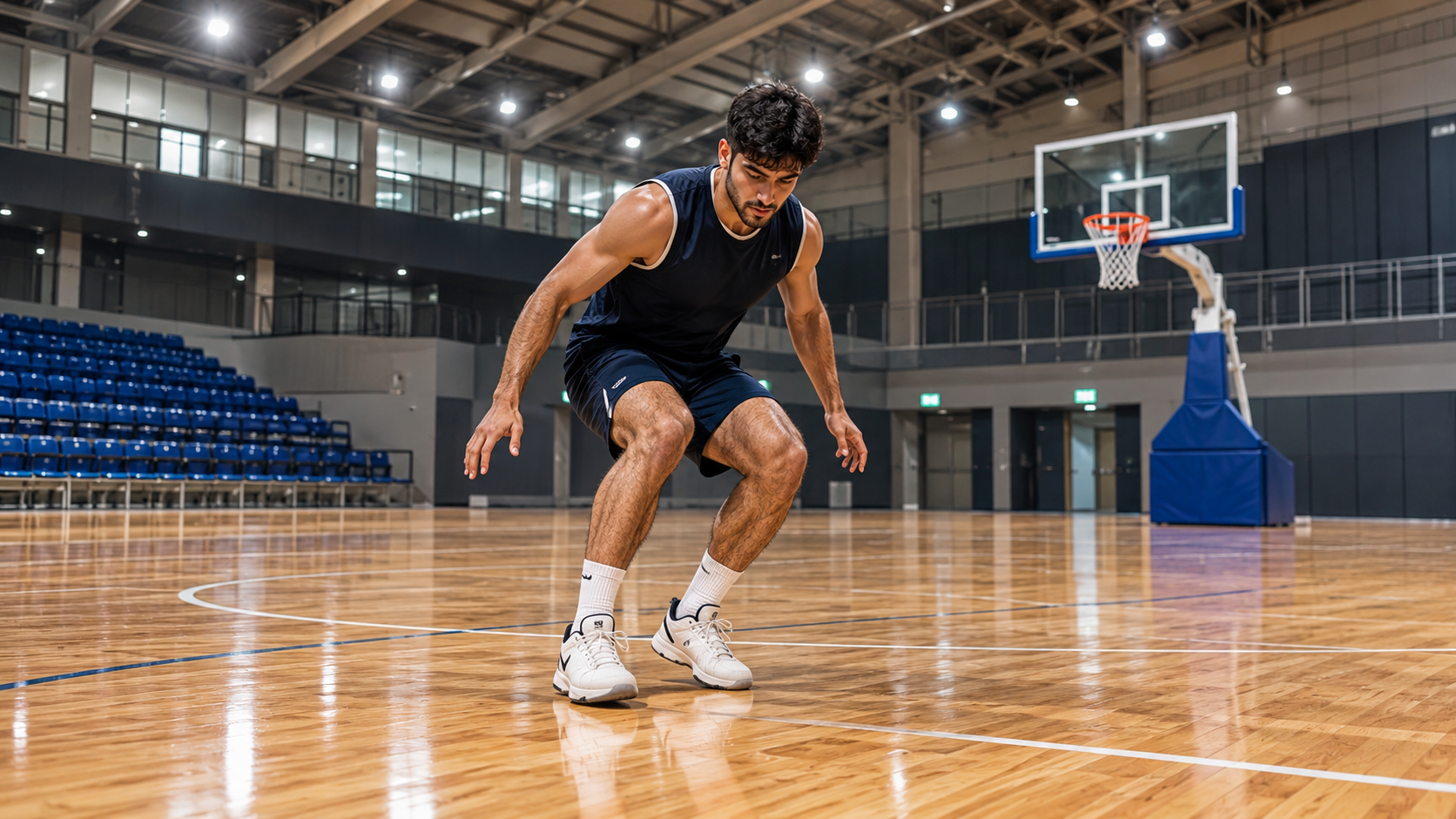
For example, when a player jumps to catch a rebound and lands on a shock-absorbing basketball court, the flooring system helps manage the impact rather than behaving like an extremely rigid surface.
The objective is not to make the floor excessively soft. Instead, the flooring should provide an appropriate balance between cushioning, stability, energy return, and ball response.
A well-designed basketball flooring system should allow players to move confidently without compromising the stability needed for high-performance gameplay.
3. How Shock Absorption Helps Protect Players
Shock absorption is one of the most important performance considerations when selecting indoor basketball court flooring.
Basketball players perform hundreds of high-impact movements during training sessions and competitive matches. A suitable sports flooring system can improve the physical playing environment by managing repeated impact forces.
Reduces Excessive Impact Stress
Running and jumping on a very hard surface can contribute to discomfort during extended playing sessions. A suitable shock-absorbing floor helps manage impact forces and may reduce the stress experienced during repeated landings.
Improves Landing Comfort
Jumping is an essential part of basketball. Players regularly land after shooting, blocking, rebounding, and attempting layups.
Basketball court flooring with appropriate shock absorption provides a more controlled landing experience, helping improve overall playing comfort.
Supports Extended Training Sessions
Schools, sports academies, and professional basketball facilities often operate for several hours every day.
A flooring system designed for regular sports activity can provide a more comfortable playing environment for athletes who participate in frequent training sessions.
Helps Create a Better Playing Environment
Shock absorption is not only about cushioning. It is also about creating a predictable surface that supports different basketball movements.
When combined with suitable grip and surface stability, the right flooring system helps players perform their movements with greater confidence.
It is important to understand that no flooring system can completely prevent sports injuries. Proper footwear, conditioning, training techniques, and maintenance also play important roles in player safety.
4. Why Slip Resistance Is Equally Important
Shock absorption is essential, but it cannot deliver complete court safety on its own. Traction and slip resistance are equally important.
Basketball requires quick acceleration, sudden braking, lateral movements, and rapid changes in direction. If the flooring surface is excessively slippery, players may struggle to maintain their balance.
A suitable basketball court surface should provide controlled grip without creating excessive friction that interferes with natural foot movement.
The benefits of appropriate slip resistance include:
- Better grip during sudden stops.
- Improved stability during lateral movements.
- More controlled acceleration and deceleration.
- Greater confidence during defensive movements.
- Reduced risk of slipping due to an unsuitable surface.
The surface should also be maintained properly. Dust, moisture, sweat, and accumulated dirt can affect traction even when the original flooring material is designed for sports use.
Regular cleaning and inspection are therefore essential for maintaining a safe basketball playing surface.
5. Different Types of Basketball Court Flooring and Their Safety Features
Choosing the right basketball flooring material depends on the intended application, available budget, installation environment, and level of sports activity.
Different flooring systems offer different performance characteristics.
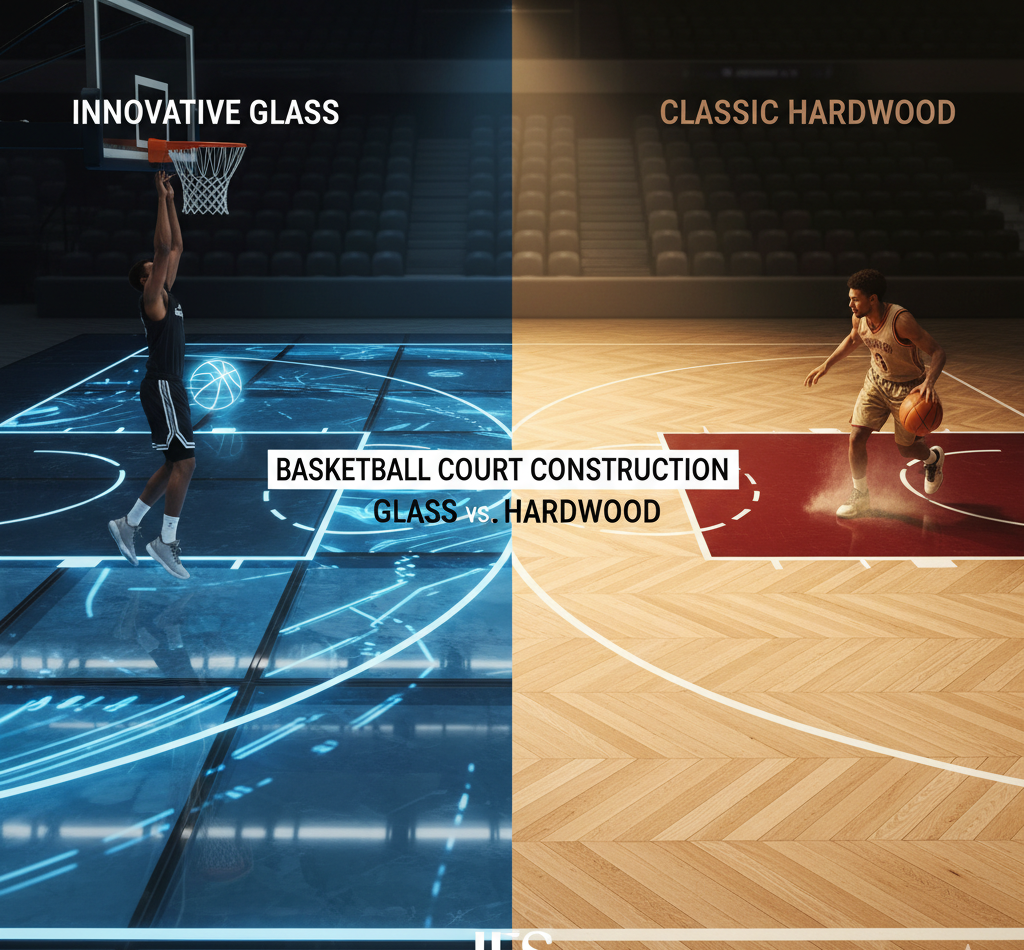
Wooden Basketball Court Flooring
Hardwood sports flooring is widely used in professional indoor basketball courts and competitive sports facilities.
It provides a traditional playing experience and can be engineered with an appropriate subfloor system to deliver controlled shock absorption and consistent ball response.
Key benefits include:
- Professional playing experience.
- Consistent ball bounce.
- Suitable traction when properly finished and maintained.
- Potential for engineered shock-absorbing subfloor systems.
- Long-term performance with appropriate maintenance.
Hardwood flooring is particularly suitable for indoor basketball arenas, sports complexes, and high-performance training facilities.
PVC Sports Flooring
PVC basketball court flooring is a popular option for indoor sports facilities, educational institutions, and multipurpose sports halls.
It is available in different thicknesses and construction formats, including sports-specific cushioned systems.
Advantages include:
- Comfortable playing surface.
- Easy cleaning and maintenance.
- Consistent surface finish.
- Multiple design and colour options.
- Availability of sports flooring systems with tested shock absorption.
However, not all PVC flooring is suitable for basketball. Buyers should select sports-grade products with documented performance characteristics rather than ordinary residential vinyl flooring.
Polyurethane (PU) Sports Flooring
Polyurethane sports flooring is another option for indoor sports facilities. Depending on the system design, it can provide a seamless, durable, and resilient playing surface.
Its performance depends on the complete flooring construction, including the base preparation, cushioning layer, and finishing system.
Common advantages include:
- Seamless surface construction.
- Customisable system specifications.
- Good wear resistance when correctly designed.
- Options for sports-specific cushioning.
- Suitable applications in indoor sports facilities.
Acrylic Basketball Court Flooring
Acrylic sports flooring is commonly used for outdoor basketball courts and certain indoor applications.
It provides a durable playing surface when installed over a suitable base. Specialised acrylic systems may also incorporate cushioning layers.
Benefits include:
- Weather-resistant options for outdoor use.
- Good surface colour retention with suitable products.
- Textured finishes for controlled traction.
- Multiple colour combinations.
- Relatively straightforward surface maintenance.
Acrylic coatings alone should not automatically be considered shock-absorbing flooring. The cushioning performance depends on whether the selected system includes a suitable resilient layer.
Modular Interlocking Sports Flooring
Modular sports flooring consists of interlocking panels designed for specific indoor or outdoor sports applications.
These systems are often selected for multipurpose courts, recreational areas, schools, and community sports facilities.
Advantages may include:
- Modular installation.
- Individual panel replacement.
- Drainage-friendly designs in selected outdoor products.
- Different surface textures and colours.
- Options designed for sports-related impact management.
Buyers should verify that the selected modular flooring is suitable for basketball rather than assuming every interlocking tile offers the same playing characteristics.
6. How to Choose Basketball Court Flooring with Proper Shock Absorption
Selecting basketball court flooring should involve more than comparing product prices and appearance.
The flooring system must match the intended level of sports activity and provide the performance characteristics required by the players.
Here are some important factors to consider.
Check Shock Absorption Performance
Always ask the manufacturer or flooring contractor for technical information about shock absorption.
For indoor sports flooring, EN 14904 is an important European standard that specifies requirements for indoor sports surfaces. It includes performance characteristics such as shock absorption, vertical deformation, friction, and ball behaviour.
Ask for relevant test reports rather than relying only on general marketing descriptions.
Evaluate Surface Friction
The flooring should provide suitable friction for basketball movements. Excessive slipperiness can affect player stability, while unsuitable high friction can interfere with natural movement.
A professionally tested sports flooring system offers more reliable performance information than a surface selected purely on appearance.
Consider Vertical Deformation
Vertical deformation refers to the amount a flooring system moves under an applied load.
Some controlled deformation can contribute to shock absorption, but excessive movement may affect stability and playing performance.
The right balance depends on the sports flooring design and applicable performance requirements.
Check Ball Bounce Performance
Basketball court flooring should provide predictable ball rebound characteristics.
An inconsistent surface can negatively affect passing, dribbling, and shooting practice.
This is why ball behaviour is an important consideration when evaluating professional basketball court flooring.
Assess Durability and Maintenance
A basketball court may experience daily training, competitive matches, and continuous foot traffic.
Choose flooring with suitable wear resistance, reliable installation quality, and a maintenance plan appropriate for the facility.
7. Indoor vs Outdoor Basketball Court Flooring: Safety Considerations
Indoor and outdoor basketball courts have different environmental requirements. Selecting the right flooring system is essential for maintaining performance and safety.
Indoor Basketball Court Flooring
Indoor courts generally focus on impact management, controlled traction, consistent ball bounce, and playing comfort.
Common choices include:
- Hardwood sports flooring.
- PVC sports flooring.
- Polyurethane sports flooring.
- Specialised indoor cushioned sports flooring systems.
Indoor courts should also have proper ventilation, moisture control, and a suitable subfloor to support the flooring system.
Outdoor Basketball Court Flooring
Outdoor basketball courts are exposed to sunlight, rain, temperature changes, dust, and other environmental conditions.
The selected flooring must be designed to withstand these conditions.
Common options include:
- Acrylic sports court flooring.
- Outdoor modular sports tiles.
- Specialised outdoor sports surfacing systems.
Outdoor court safety also depends on proper drainage, surface levelling, and maintenance.
Standing water, damaged coatings, loose tiles, and uneven concrete can create hazardous playing conditions.
8. The Role of Professional Installation in Basketball Court Safety
Even the best basketball flooring material may fail to deliver the expected performance if it is installed incorrectly.
Professional installation is essential because the performance of a sports floor depends on the entire flooring system, not just the visible top layer.
Important installation considerations include:
Subfloor preparation: The base should be properly prepared, clean, level, and suitable for the selected flooring system.
Moisture assessment: Excessive moisture can damage certain flooring materials and affect bonding.
Correct layer installation: Each layer should be installed according to the manufacturer’s specifications.
Surface finishing: The final surface should have the required texture, grip, and playing characteristics.
Line marking: Basketball court markings should be accurate, clearly visible, and applied using compatible materials.
Quality inspection: The completed floor should be inspected for uneven areas, installation defects, and relevant performance requirements.
Working with an experienced basketball court flooring contractor helps ensure that the selected product and installation method are appropriate for the intended facility.
9. Common Basketball Court Flooring Mistakes to Avoid
When developing a new basketball court, certain mistakes can affect player comfort, safety, and long-term maintenance costs.
Here are some common issues to avoid:
- Choosing flooring based only on price: Low-cost materials may not provide the performance characteristics needed for regular basketball activities.
- Ignoring shock absorption: A surface that is too rigid may be uncomfortable during repeated high-impact movements.
- Selecting ordinary flooring instead of sports flooring: Residential vinyl, general-purpose tiles, and unsuitable coatings may not meet basketball performance requirements.
- Overlooking slip resistance: An unsuitable surface finish can affect player movement and balance.
- Ignoring drainage in outdoor courts: Poor drainage can result in standing water and unsafe playing conditions.
- Hiring inexperienced installers: Incorrect base preparation and installation can compromise the complete flooring system.
- Neglecting maintenance: Dust, moisture, damaged panels, and worn finishes can reduce the safety and performance of a court over time.
Avoiding these mistakes can help facility owners create a more reliable and functional basketball playing environment.
10. Basketball Court Flooring Maintenance for Long-Term Safety
Proper maintenance is necessary to preserve the performance and appearance of basketball court flooring.
Even high-quality sports flooring can lose its functional properties when it is not maintained correctly.
Recommended maintenance practices include:
- Clean the court regularly using manufacturer-approved cleaning products.
- Remove dust and debris before playing sessions.
- Clean sweat and liquid spills immediately.
- Avoid using harsh chemicals that may damage the surface.
- Inspect the flooring regularly for cracks, gaps, or loose panels.
- Check the surface for worn or damaged areas.
- Maintain proper drainage around outdoor basketball courts.
- Schedule professional inspections when required.
For indoor courts, maintaining a clean and dry playing surface is particularly important for preserving traction.
For outdoor courts, periodic inspection of surface coatings, joints, drainage, and modular panels can help identify problems before they become more serious.
11. Why Investing in Quality Basketball Court Flooring Is a Smart Decision
Basketball court flooring is a long-term investment that influences the usability, performance, and maintenance requirements of a sports facility.
Choosing a quality flooring system may involve a higher initial investment, but it can offer important long-term benefits.
These include:
- Better playing comfort.
- More consistent sports performance.
- Appropriate impact management.
- Improved surface stability.
- Reliable traction.
- Reduced maintenance difficulties when properly selected.
- A more professional appearance.
- Better suitability for regular training and competition.
For schools, colleges, sports academies, residential communities, and professional sports facilities, selecting the correct basketball court flooring can help create a safer and more enjoyable sports environment.
The most suitable option is not necessarily the most expensive product. It is the flooring system that matches the facility’s usage, performance requirements, environmental conditions, and maintenance capabilities.
12. Why Choose a Professional Basketball Court Flooring Service?
A successful basketball court project requires the right combination of material selection, technical knowledge, surface preparation, and professional installation.
An experienced basketball court flooring service provider can help you identify the most suitable system based on your facility’s requirements.
Before finalising a contractor, consider the following:
- Experience in sports flooring installation.
- Knowledge of indoor and outdoor basketball flooring systems.
- Availability of technical product specifications.
- Understanding of sports surface performance standards.
- Quality of subfloor preparation.
- Installation and maintenance support.
- Previous sports flooring projects.
A reliable flooring partner should be able to explain the differences between available flooring systems and recommend a solution based on actual performance requirements rather than simply promoting one product.
Conclusion: Make Player Safety a Priority with the Right Basketball Court Flooring
Safety and shock absorption should never be overlooked when designing or upgrading a basketball court. From managing repeated landing impacts to providing suitable traction and consistent ball response, the right basketball court flooring plays an important role in creating a better playing environment.
Whether you are planning an indoor basketball stadium, an outdoor sports court, a school playground, or a professional basketball training facility, selecting a sports-specific flooring system is essential.
Focus on tested shock absorption, appropriate friction, surface stability, durability, and professional installation. These factors can help you create a basketball court that supports player comfort, reliable performance, and long-term usability.
Looking for professional basketball court flooring solutions? Choose a flooring system that combines quality materials, technical performance, and expert installation to build a court where players can perform with greater confidence.
Invest in the right basketball court flooring today and
make safety an essential part of every game.