


Introduction
A 400 meter running track is the standard athletics track used for professional competitions, school sports events, and training facilities worldwide. Whether it is for a school stadium, sports academy, university campus, or professional athletics complex, a properly designed running track ensures athlete safety, durability, and high performance.
At Sports Facility India, we specialize in 400m running track construction, delivering high-quality synthetic athletic tracks that meet international standards. Our experienced team provides complete solutions including base preparation, track surfacing, lane marking, and final finishing to create world-class athletic facilities.
What is a 400 Meter Running Track?
A 400m running track is an oval-shaped athletics track with a total lap distance of 400 meters in lane 1. Standard tracks generally include 8 running lanes, though some training facilities may have 6 lanes.
These tracks are designed according to guidelines from the World Athletics (formerly IAAF), ensuring proper dimensions, safety, and performance for athletes.
Key features of a standard 400m track include:
-
Oval design with two straights and two curved sections
-
8 lanes with a width of 1.22 meters per lane
-
Shock-absorbing synthetic surface
-
Proper drainage system
-
High visibility lane markings
Such tracks are widely used for athletics events including sprints, middle-distance races, hurdles, and relay competitions.
Types of 400 Meter Running Track Surfaces
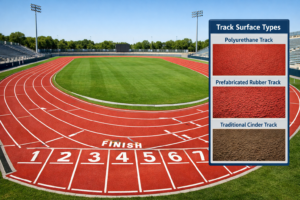
Choosing the right surface is essential for performance, durability, and athlete safety. Several materials are commonly used in modern athletics track construction.
1. Synthetic Running Track
Synthetic surfaces are the most popular choice for professional tracks.
Features include:
-
Excellent shock absorption
-
Weather resistance
-
Long lifespan
-
Consistent running performance
Synthetic tracks are used in many international competitions such as the Olympic Games and World Athletics Championships.
2. Polyurethane (PU) Running Track
PU running tracks provide a seamless and flexible surface that enhances athlete comfort and speed.
Benefits include:
-
High elasticity and grip
-
Seamless finish
-
Long-term durability
-
Professional competition standard
These tracks are ideal for stadiums and athletics training centers.
3. Prefabricated Rubber Track
Prefabricated tracks use factory-made rubber sheets installed on-site.
Advantages include:
-
Quick installation
-
Consistent thickness
-
Eco-friendly materials
These are often used for international stadium projects.
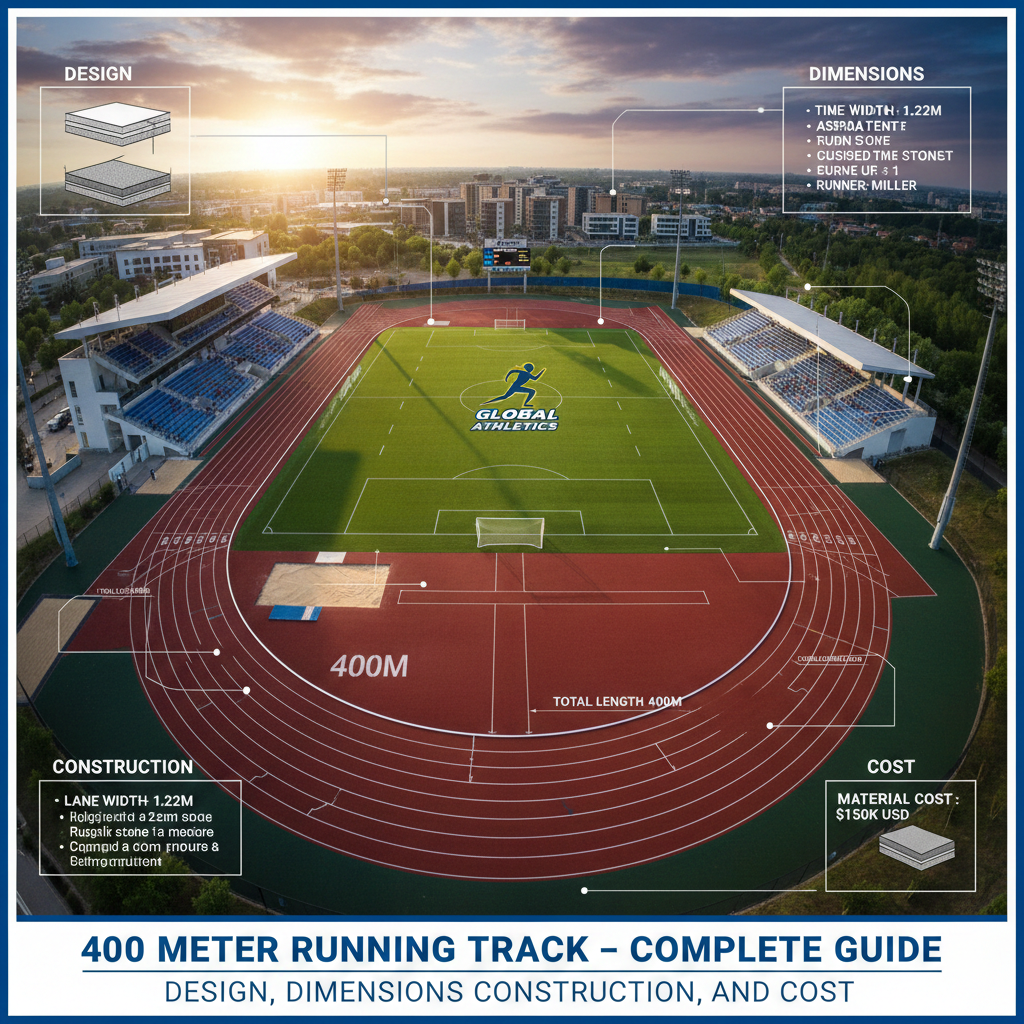
Standard Dimensions of a 400m Running Track
A professional 400 meter athletics track follows strict measurements.
Key specifications include:
-
Total lap distance: 400 meters
-
Lane width: 1.22 meters
-
Number of lanes: 6–8 lanes
-
Straight length: 84.39 meters
-
Curve radius: 36.5 meters
Proper geometry ensures fair competition and accurate timing.
400 Meter Running Track Construction Process
Constructing a professional athletics track requires careful planning and engineering. The process typically includes the following steps.
1. Site Preparation
The first stage involves clearing the site, leveling the ground, and preparing the sub-base for the track.
This step ensures a stable foundation that prevents surface damage over time.
2. Base Layer Construction
A strong base layer is created using:
-
Compacted soil
-
Stone aggregates
-
Asphalt or concrete layer
This base provides structural support for the synthetic track surface.
3. Synthetic Surface Installation
After the base is completed, the synthetic running surface is applied in multiple layers.
Typical layers include:
-
Primer layer
-
Cushion layer
-
Wear-resistant top layer
These layers provide shock absorption, durability, and grip.
4. Lane Marking and Finishing
Finally, precise lane markings and event markings are applied using specialized sports paint.
This includes:
-
Lane numbers
-
Start and finish lines
-
Relay exchange zones
-
Hurdle markings
The result is a professional athletics track ready for competition and training.
Benefits of Synthetic 400m Running Tracks
Modern running tracks offer numerous advantages compared to traditional cinder tracks.
Athlete Safety
Synthetic surfaces reduce impact stress on joints and muscles, lowering injury risks.
Improved Performance
Athletes benefit from better traction, energy return, and consistent running conditions.
Weather Resistance
Synthetic tracks perform well in rain, heat, and varying weather conditions.
Long-Term Durability
High-quality athletic tracks can last 10–15 years with proper maintenance.
Applications of 400 Meter Running Tracks
Professional running tracks are widely used in various sports facilities including:
-
School and college sports grounds
-
Athletics stadiums
-
Sports academies
-
Universities
-
Government sports complexes
-
Professional training centers
These facilities support both recreational runners and professional athletes.
Why Choose Professional Running Track Contractors?
Building a standard athletics track requires technical expertise and specialized equipment. Professional contractors ensure:
-
International standard design
-
Proper drainage and base work
-
Accurate track dimensions
-
High-quality synthetic materials
-
Long-lasting durability
Working with experienced sports infrastructure companies ensures a reliable and professional result.
Maintenance of a 400 Meter Running Track
To maintain performance and durability, regular track maintenance is essential.
Recommended practices include:
-
Regular cleaning of debris
-
Avoiding sharp objects on the track
-
Periodic surface inspection
-
Repainting lane markings when required
Proper maintenance significantly extends the lifespan of synthetic tracks.
400 Meter Running Track Construction in India
With the rapid growth of sports infrastructure in India, the demand for modern athletics tracks has increased significantly. Many schools, universities, and sports authorities are investing in high-quality running tracks to support athlete development.
Professional sports construction companies provide complete turnkey solutions, from design and engineering to installation and finishing.
Conclusion
A 400 meter running track is more than just a sports surface—it is the backbone of competitive athletics. From precise construction and certified flooring systems to expert installation and maintenance, every element plays a critical role. Collaborating with an experienced running track manufacturer and professional court construction service ensures a world-class facility that meets international standards and nurtures athletic excellence.
Frequently Asked Questions (FAQs)
1. Why is the 400 meter track the global standard?
It provides uniformity, fairness, and accurate performance comparison worldwide.
2. Which flooring is best for a 400 meter running track?
Polyurethane and sandwich system flooring offer the best balance of durability, safety, and performance.
3. How much land is required for a standard track?
An area of approximately 176.91m × 92.5m is required, including safety zones.
4. What is the construction cost of a running track?
In India, costs range from ₹3–₹7 crore; globally, it can exceed $1 million.
5. Who should build a 400 meter running track?
A certified running track manufacturer or professional court construction company should handle the project.