

Introduction
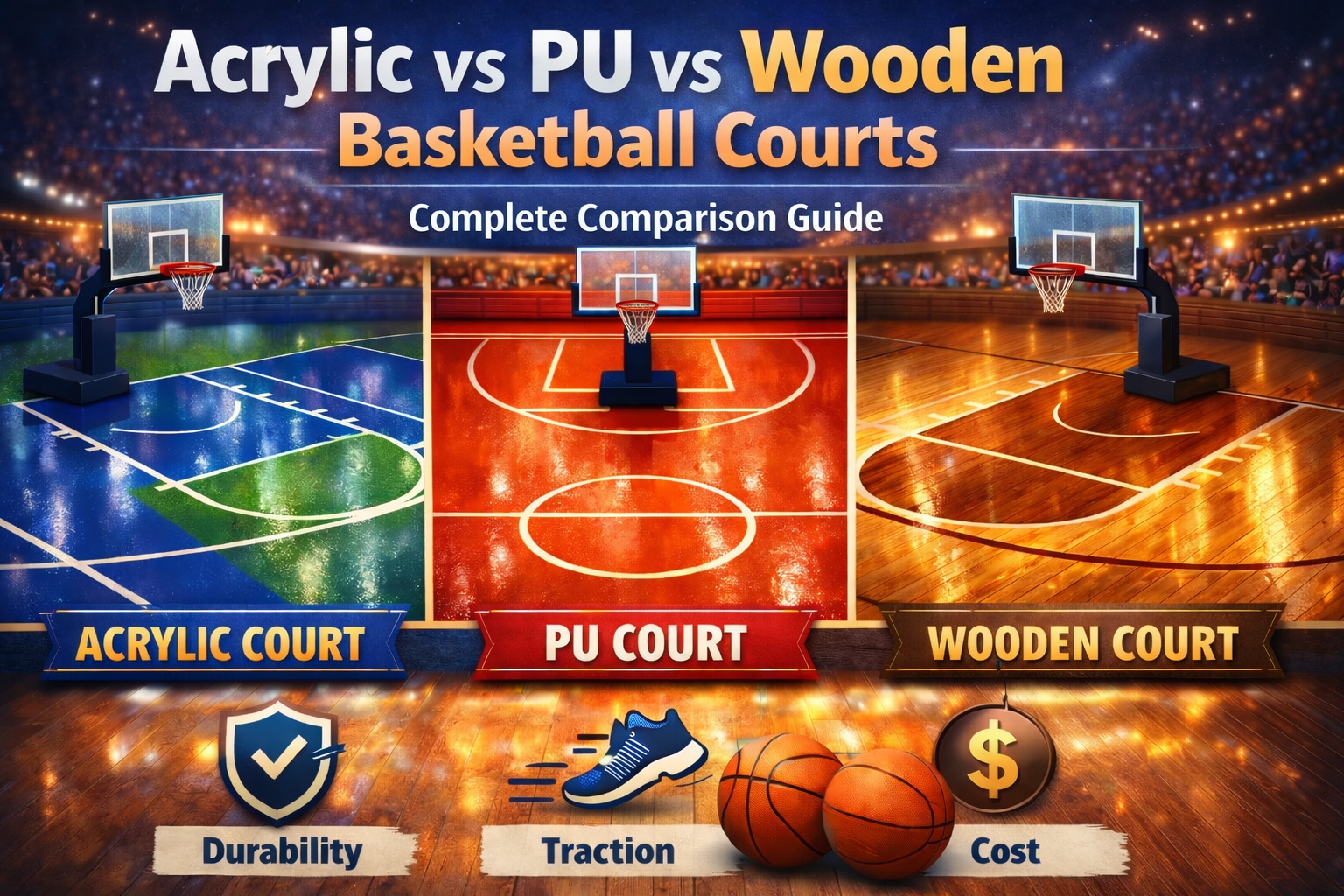
Choosing the right basketball court surface is one of the most important decisions for schools, sports complexes, clubs, and residential facilities. The surface directly affects player performance, safety, durability, and long-term maintenance costs. Among the most commonly used basketball court surfaces are acrylic, PU (polyurethane), and wooden flooring.
Each of these materials offers unique advantages and limitations. While acrylic courts are widely used for outdoor applications due to their cost-effectiveness and durability, PU courts provide a balance of comfort and performance, making them ideal for multi-purpose indoor spaces. Wooden courts, often seen in professional arenas, are known for their superior playing experience and premium finish.
This guide provides a detailed comparison of acrylic, PU, and wooden basketball courts to help you make an informed decision based on your needs, budget, and usage.
Key Factors That Influence Court Performance
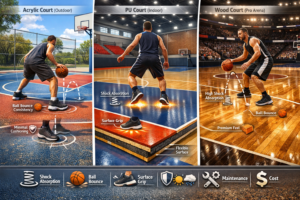
Before comparing surfaces, it’s important to understand the factors that determine court quality:
- Shock absorption: Reduces stress on joints
- Ball bounce consistency: Ensures predictable gameplay
- Surface grip: Prevents slipping
- Durability: Resistance to wear and weather
- Maintenance requirements: Time and cost of upkeep
- Installation cost: Initial investment
These factors vary significantly across acrylic, PU, and wooden courts.
What Is an Acrylic Basketball Court?
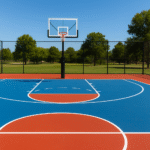
An acrylic basketball court is a hard surface system typically applied over concrete or asphalt. It is widely used for outdoor courts due to its durability and weather resistance.
Composition and Structure of Acrylic Courts
Acrylic courts are built in multiple layers:
- Concrete or asphalt base
- Primer layer
- Acrylic resurfacer
- Color coating
- Line markings
The surface is textured to provide grip and consistent ball bounce.
Advantages and Limitations of Acrylic Surfaces
Advantages
- Cost-effective installation
- Low maintenance
- Excellent weather resistance
- UV-stable colors
- Suitable for outdoor use
Limitations
- Minimal cushioning (hard on joints)
- Can develop cracks if base shifts
- Less comfortable for professional play
Acrylic courts are ideal for schools, parks, and community spaces.
What Is a PU (Polyurethane) Basketball Court?
PU (polyurethane) flooring is a synthetic, seamless sports surface designed to provide cushioning and high performance. It is commonly used in indoor sports halls and multi-purpose facilities.
How PU Flooring Is Made and Installed
PU courts are installed in layers:
- Concrete base
- Primer
- Cushion layer (elastic PU)
- Wear layer
- Anti-slip top coat
This multi-layer system provides flexibility and shock absorption.
Pros and Cons of PU Basketball Courts
Pros
- Excellent shock absorption
- Comfortable for players
- Seamless and smooth finish
- Suitable for multi-sport use
- Good durability
Cons
- Higher cost than acrylic
- Requires skilled installation
- Moderate maintenance
PU courts are preferred for training facilities and indoor arenas.
What Is a Wooden Basketball Court?
Wooden basketball courts are considered the gold standard in professional sports. These courts are typically made from high-quality hardwood and are used in indoor stadiums.
Types of Wood Used in Basketball Courts
- Maple wood: Most commonly used due to durability and uniform grain
- Engineered wood systems for added stability
- Solid hardwood planks with subfloor systems
Maple is preferred because it provides consistent bounce and excellent finish.
Benefits and Drawbacks of Wooden Courts
Benefits
- Superior playing experience
- Excellent shock absorption
- High aesthetic appeal
- Used in professional leagues
Drawbacks
- Expensive installation
- High maintenance
- Sensitive to moisture
- Requires controlled indoor environment
Wooden courts are best suited for professional and premium indoor facilities.
Acrylic vs PU vs Wooden Courts: Key Differences
| Feature | Acrylic | PU | Wooden |
|---|---|---|---|
| Surface Type | Hard | Semi-elastic | Natural elastic |
| Cushioning | Low | Medium | High |
| Cost | Low | Medium | High |
| Maintenance | Low | Medium | High |
| Lifespan | 5–10 years | 8–15 years | 20+ years |
| Usage | Outdoor | Indoor | Indoor |
Performance and Player Comfort Comparison
- Acrylic courts: Offer fast gameplay but less comfort
- PU courts: Provide balanced performance and comfort
- Wooden courts: Deliver the best playing experience with excellent shock absorption
Players who train frequently benefit more from cushioned surfaces like PU or wood.
Durability and Maintenance Requirements
- Acrylic: Minimal maintenance; occasional resurfacing
- PU: Requires cleaning and periodic recoating
- Wooden: Needs polishing, sanding, and climate control
Durability depends heavily on usage and environmental conditions.
Cost Comparison Table
Cost is often the deciding factor, especially for schools, community centers, and private installations. Let’s break it down:
| Surface Type | Installation Cost | Maintenance Cost | Lifespan |
|---|---|---|---|
| Acrylic | Low | Low | 5–10 years |
| PU | Medium | Medium | 8–15 years |
| Wooden | High | High | 20+ years (with care) |
Indoor vs Outdoor Suitability
Best Surface for Outdoor Courts
- Acrylic is the best choice due to weather resistance and durability
- PU and wood are not suitable for outdoor conditions
Best Surface for Indoor Arenas
- Wooden courts for professional use
- PU courts for training and multi-purpose halls
Choosing the right surface depends on location and usage.
Safety Considerations and Injury Risks
- Hard surfaces like acrylic can increase joint stress
- PU and wooden courts reduce impact and injury risk
- Proper surface grip prevents slipping
- Shock absorption is crucial for long-term player health
Facilities prioritizing safety should consider cushioned surfaces.
Which Basketball Court Surface Should You Choose?
The right choice depends on your requirements:
- Choose Acrylic if:
- You need a budget-friendly outdoor court
- Low maintenance is a priority
- Choose PU if:
- You want comfort and versatility
- The court will be used indoors
- Choose Wooden if:
- You need a professional-grade court
- Budget is not a constraint
- Indoor controlled environment is available
Each surface serves a different purpose, and selecting the right one ensures long-term value.
Conclusion
Acrylic, PU, and wooden basketball courts each offer distinct benefits tailored to different environments and user needs. Acrylic courts are practical and economical for outdoor use, PU courts provide a balance of comfort and performance for indoor facilities, and wooden courts deliver unmatched quality for professional play.
Understanding these differences helps in making a strategic investment that aligns with your goals, whether it’s community recreation, athlete training, or professional competition. By considering factors such as cost, durability, maintenance, and player safety, you can choose the ideal basketball court surface that delivers both performance and longevity.
FAQ
1. Which basketball court surface is best for beginners?
>>>>>>>PU courts are ideal due to their cushioning and comfort.
2. Can wooden courts be used outdoors?
No, wooden courts are only suitable for indoor environments.
>3. How long does an acrylic court last?
Typically 5–10 years with proper maintenance.
>4. Is PU flooring better than acrylic?
>>>>>PU offers better comfort, but acrylic is more cost-effective.
5. Why are wooden courts used in professional games?
They provide the best ball bounce, grip, and player comfort.
6. Which surface requires the least maintenance?
Acrylic courts require the least maintenance.
7. Can PU courts be used for multiple sports?
Yes, PU surfaces are suitable for multi-purpose indoor facilities.