

A well-designed basketball court is much more than a flat surface with hoops—it represents precision engineering, quality materials, and expert construction that deliver safety, optimal performance, and long-lasting durability. Whether you are building a professional competition arena, a school gym, a community playground, or a private facility, proper basketball court design ensures an enhanced playing experience, reduced injury risk, and long-term value.
Across India, basketball is rapidly gaining popularity in Mumbai, Delhi, Bangalore, Hyderabad, Chennai, Kolkata, Pune, Ahmedabad, Jaipur, Lucknow, Coimbatore, Indore, Bhubaneswar, Kochi, and Patna, making professional construction services a critical investment for schools, housing societies, sports academies, and municipal complexes.
Importance of Professional Basketball Court Design
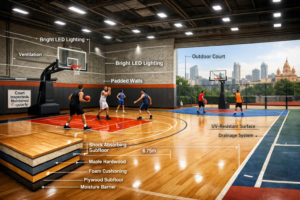
Proper design directly affects gameplay, player safety, and maintenance. Poorly constructed courts can lead to uneven surfaces, inconsistent bounce, reduced traction, and higher injury risks. High-quality court design ensures:
-
Smooth, durable playing surfaces for consistent ball bounce and grip.
-
Correct dimensions and layout according to FIBA and BFI standards.
-
Optimal lighting and ventilation for indoor courts.
-
Shock-absorbing flooring and cushioned materials for player safety.
Every aspect, from court size to flooring material, contributes to the performance and longevity of the facility.
Key Considerations for Basketball Court Design
1. Court Dimensions and Layout
Standard basketball court measurements for India and international competitions include:
-
Full-size professional court: 28 m × 15 m
-
High school courts: 26 m × 14 m
-
Half-courts or recreational courts: Flexible, based on available space
Proper layout ensures adequate space for:
-
Playing area and boundaries
-
Free throw lanes and three-point arcs
-
Player benches, spectator seating, and safety zones
This careful planning enhances player movement and reduces injury risks.
2. Surface Material Selection
The choice of surface impacts durability, performance, and player comfort:
-
Hardwood Flooring: Premium choice for indoor professional courts. Maple wood provides durability, smooth bounce, and aesthetic appeal.
-
Synthetic Surfaces: Polyurethane (PU), PVC, or modular tiles offer shock absorption, multi-sport versatility, and low maintenance.
-
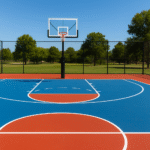
Outdoor Surfaces: Asphalt or concrete with epoxy or acrylic coatings ensures weather resistance, non-slip grip, and long-term durability.
Every surface must be leveled, seamless, and wear-resistant, maintaining consistent performance for years.
3. Structural Design & Subfloor Construction
The subfloor forms the foundation of a high-quality basketball court, preventing warping, uneven surfaces, and injuries:
-
Cushioning Layer: Absorbs impact to reduce joint stress.
-
Moisture Barrier: Protects indoor floors from water damage.
-
Support Base: Ensures levelness and stability.
For professional indoor courts, sprung wooden floors or floating subfloor systems are preferred for optimal bounce and resilience.
4. Lighting and Ventilation
Proper lighting and airflow enhance indoor court usability:
-
Lighting: Uniform, glare-free LED or fluorescent fixtures. Recommended: 300–500 lux for training, 1,500 lux for professional tournaments.
-
Ventilation: Ensures comfort and air quality through natural airflow, HVAC systems, or exhaust fans.
5. Court Accessories & Safety Features
A premium court includes:
-
Hoops & Backboards: Adjustable, professional-grade, tempered glass for safety.
-
Padding: Wall padding, baseline padding, and pole protection to reduce injuries.
-
Markings: Durable, clear lines for boundaries, free throws, three-pointers, and center circles.
-
Benches & Storage: Comfortable seating and organized storage for balls and equipment.
6. Outdoor Court Considerations
Outdoor courts must handle India’s variable climate:
-
Drainage Systems: Prevent water accumulation and surface damage.
-
UV-Resistant Coatings: Maintain color and surface integrity under sunlight.
-
Non-Slip Finish: Ensures safety during wet conditions.
-
Fencing: Secures the court, controls ball movement, and prevents unauthorized access.
7. Maintenance & Longevity
Regular maintenance ensures safety, performance, and extended lifespan:
-
Cleaning: Sweep and wash regularly to remove dust and debris.
-
Surface Treatment: Polish, reseal, or recoat periodically depending on flooring material.
-
Inspections: Monitor cracks, uneven surfaces, and damaged accessories.
Investing in high-quality construction reduces long-term costs and enhances player experience.
Why Choose a Professional Basketball Court Builder
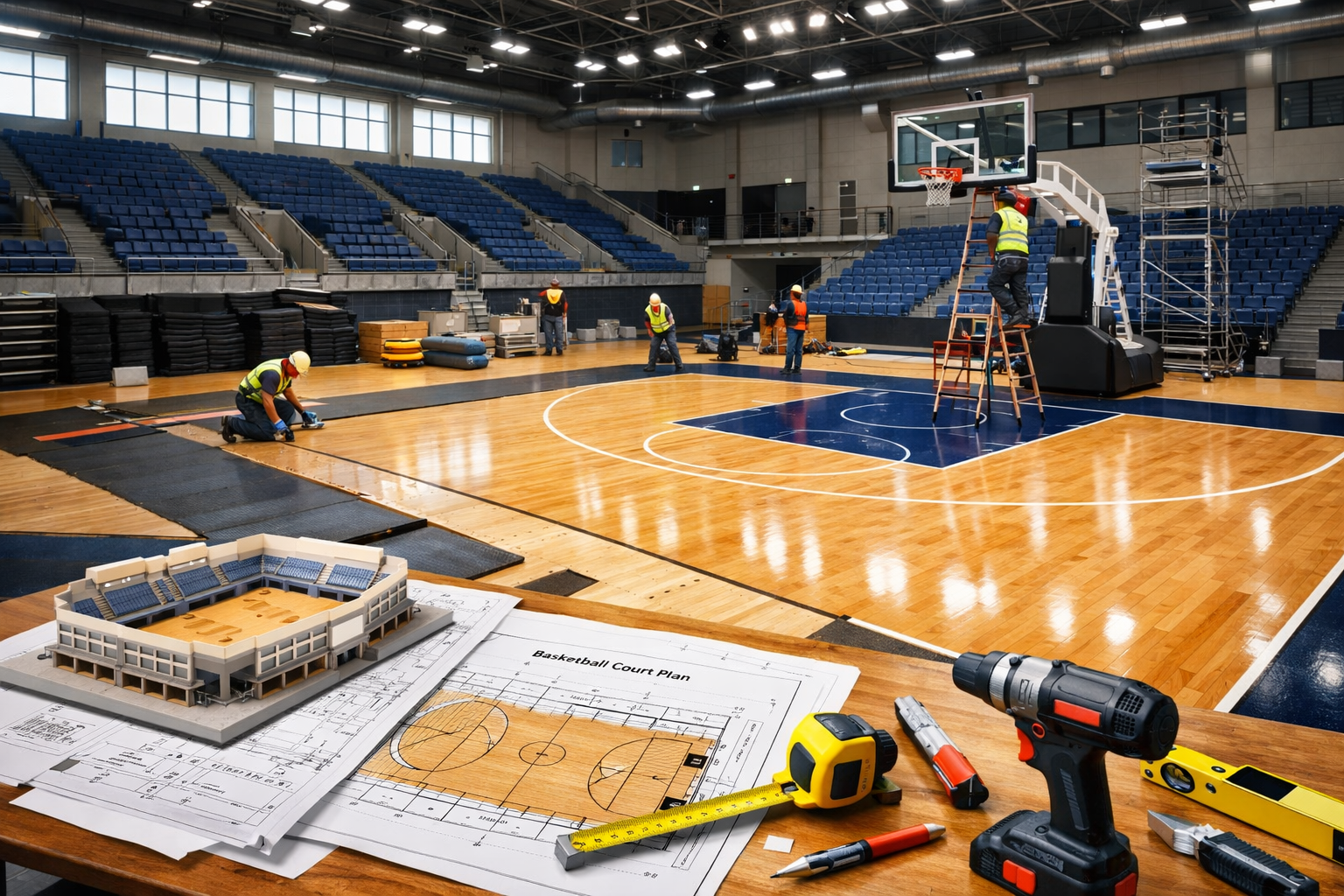
Professional construction requires expertise in sports flooring, civil engineering, and facility design:
-
Accurate measurement and FIBA-compliant planning
-
Use of premium, durable materials
-
Efficient project execution with minimal delays
-
Post-construction support, including maintenance guidance and warranties
Hiring a professional guarantees a safe, high-performance, and tournament-ready facility.
Geo-Targeted Services Across 15 Major Indian Cities
Professional basketball court design and construction services are available in:
-
Mumbai: Indoor wooden courts, acrylic outdoor courts for schools and academies.
-
Delhi: FIBA-compliant indoor & outdoor community courts.
-
Bangalore: Multi-sport synthetic courts and professional indoor setups.
-
Hyderabad: Weather-resistant outdoor courts and indoor training facilities.
-
Chennai: Durable indoor wooden floors and outdoor PU/acrylic courts.
-
Kolkata: Flood-resistant outdoor courts and indoor sports halls.
-
Pune: Residential and professional-grade courts with proper drainage.
-
Ahmedabad: Quick-install modular courts for schools and communities.
-
Jaipur: UV-resistant outdoor surfaces and indoor academy courts.
-
Lucknow: Cost-effective community courts with premium safety features.
-
Coimbatore: PU and tile-based indoor and outdoor courts for schools and societies.
-
Indore: Professional indoor academies and community-friendly outdoor courts.
-
Bhubaneswar: Sustainable indoor/outdoor FIBA-compliant courts.
-
Kochi: Rainproof, UV-stable courts for residential and sports complexes.
-
Patna: Durable professional and community courts with optimal drainage.
Each city-specific project adapts to local climate, soil conditions, and regulations, ensuring durability, safety, and compliance with BFI and SAI standards.
Conclusion
Designing and constructing a basketball court in India is a blend of expertise, planning, and quality materials. From surface selection and subfloor construction to lighting, ventilation, and safety features, every detail matters. Whether for a school in Delhi, a residential society in Mumbai, or a professional academy in Bangalore, investing in professional construction ensures:
-
Safe and durable foundations
-
FIBA-compliant indoor and outdoor surfaces
-
Tournament-ready hoops, markings, and lighting
-
Long-term, low-maintenance performance
A well-designed basketball court is more than a facility—it inspires teamwork, athletic growth, and community engagement. With expert planning and construction, your basketball court can become a benchmark for quality, performance, and safety for years to come.
FAQs – Basketball Court Construction in [india]
Q1: How long does it take to build a basketball court in [india]?
A1: Outdoor courts typically take 4–6 weeks, while indoor professional courts can take 3–6 months depending on site conditions.
Q2: What types of flooring are best for [india]’s climate?
A2: Outdoor acrylic or PU-coated surfaces are ideal for weather resistance; indoor courts benefit from hardwood maple or synthetic PU floors.
Q3: Are these courts FIBA-compliant?
A3: Yes. All our projects meet FIBA and BFI standards for court dimensions, hoop heights, and surface quality.
Q4: Can you build courts in schools, residential societies, and academies?
A4: Absolutely. Our services are tailored to schools, housing societies, community centers, and professional academies.
Q5: How do I maintain an outdoor basketball court in [india]?
A5: Regular cleaning, periodic recoating, and inspections for cracks or drainage issues ensure safety and longevity.