
|
Getting your Trinity Audio player ready...
|
Introduction
Outdoor basketball courts provide players with a great space to practise, improve their skills, and enjoy the game. Unlike indoor courts, outdoor basketball courts are directly exposed to changing weather conditions throughout the year. Sunlight, rain, humidity, temperature fluctuations, and dust can all affect the condition and performance of basketball court flooring.
Choosing the right flooring is therefore an important part of building a durable outdoor basketball court. A surface that performs well in one climate may not provide the same results in another. For example, excessive heat can cause certain materials to expand, while continuous rainfall can lead to water accumulation and surface damage if proper drainage is not provided.
Whether you are developing a basketball court for a school, college, sports academy, residential society, or professional sports facility, understanding the impact of weather can help you make better flooring decisions.
In this blog, we will explain how different weather conditions affect outdoor basketball court flooring and what you can do to protect your court and maintain its performance over time.
1. Impact of Extreme Sunlight and UV Exposure
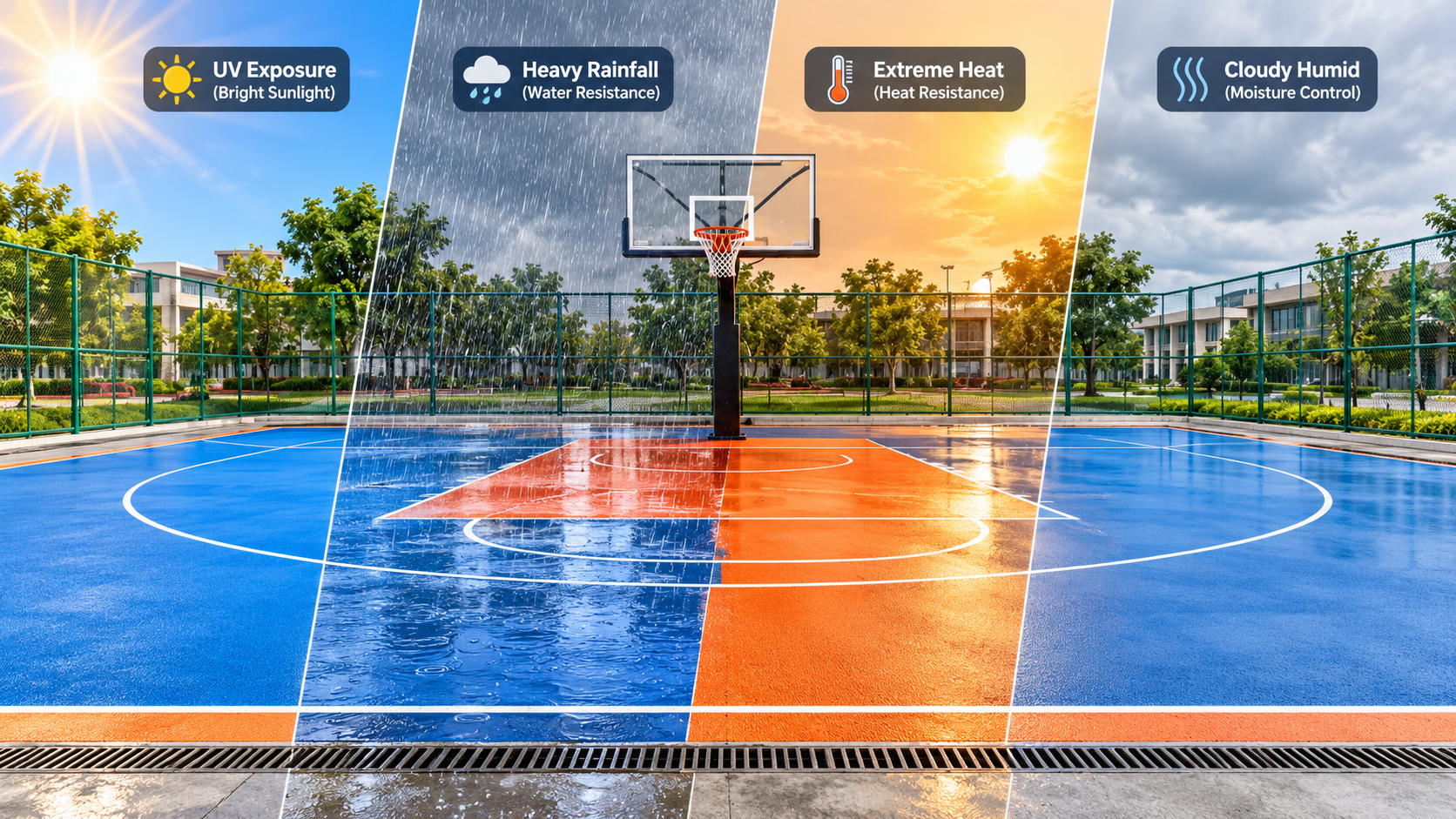
One of the biggest challenges for outdoor basketball court flooring is continuous exposure to direct sunlight. In regions that experience long summers and high temperatures, basketball court surfaces can remain under intense sunlight for several hours every day.
Ultraviolet (UV) rays can gradually affect the colour, appearance, and physical properties of flooring materials. Some surfaces may lose their original colour, become faded, or experience gradual deterioration when they are not designed for outdoor use.
High surface temperatures can also affect the comfort of players. Certain flooring materials absorb more heat, making the court uncomfortable to use during afternoon hours.
How to reduce sunlight damage:
- Choose UV-resistant basketball court flooring materials.
- Use outdoor-grade acrylic coatings or suitable sports flooring systems.
- Select colour combinations designed to withstand outdoor exposure.
- Carry out regular surface inspections to identify fading or deterioration.
- Consider providing shaded seating and resting areas around the court.
Selecting flooring with good UV resistance can help maintain its appearance and performance for a longer period.
2. Effects of Heavy Rainfall on Basketball Court Flooring
Rainfall is another important factor that influences outdoor basketball court performance. When rainwater collects on the playing surface, it can make the court slippery and unsafe for players.
Poor drainage can also create long-term problems. Standing water may gradually affect surface coatings, weaken certain layers, and contribute to cracks or peeling, particularly when the underlying base has not been properly constructed.
For basketball players, even a small amount of water can affect movement, jumping, and sudden direction changes. This increases the possibility of slipping and falling.
How to protect the court from rainfall:
- Ensure proper slope and drainage during court construction.
- Use outdoor sports flooring with suitable water resistance.
- Avoid materials that retain excessive moisture.
- Keep drainage outlets free from leaves, mud, and other blockages.
- Inspect the surface after heavy rainfall.
- Allow the playing surface to dry completely before regular use.
A properly designed drainage system is just as important as selecting good-quality basketball court flooring.
3. How High Temperatures Affect Outdoor Sports Flooring
Extreme heat can create several challenges for outdoor basketball courts. During summer, the temperature of the playing surface can become significantly higher than the surrounding air temperature, especially when dark-coloured materials are used.
Some flooring materials expand when exposed to heat. If the installation does not allow for the natural movement of the material, it may result in surface deformation, joint movement, or other installation-related problems.
In addition, prolonged heat exposure can affect the flexibility and durability of certain synthetic materials.
For players, a very hot surface can reduce comfort and make outdoor practice difficult during peak afternoon hours.
Recommended precautions:
- Select flooring materials suitable for the local temperature range.
- Ensure professional installation with appropriate expansion provisions.
- Choose coatings designed for outdoor temperature variations.
- Avoid using indoor-only flooring materials in exposed outdoor areas.
- Schedule court maintenance during cooler parts of the day.
For locations with particularly hot summers, selecting a heat-tolerant flooring system is essential for long-term performance.
4. Effects of Cold Weather and Temperature Fluctuations
Cold weather can also influence outdoor basketball court flooring. In areas where temperatures drop significantly during winter, some materials may become less flexible.
Repeated changes between hot and cold conditions can cause materials to expand and contract. Over time, these movements may contribute to surface stress, cracks, joint separation, or coating damage, especially when the court has been poorly installed.
Moisture can make the situation more complicated. Water entering small cracks may cause additional damage during freezing conditions.
Although severe freezing is not common in every part of India, temperature fluctuations between seasons should still be considered when planning an outdoor sports facility.
Ways to minimise cold-weather damage:
- Use flooring systems designed for outdoor temperature variations.
- Ensure the concrete or asphalt base is properly prepared.
- Repair minor cracks before they become larger problems.
- Check joints and surface coatings periodically.
- Prevent water from collecting in damaged areas.
Proper base preparation and professional installation help outdoor basketball courts withstand seasonal temperature changes.
5. Impact of Humidity and Moisture
Humidity is particularly important in regions that experience long monsoon seasons or humid weather throughout the year.
High moisture levels can affect certain flooring materials, especially those that are not designed for outdoor conditions. If moisture enters the flooring layers or remains trapped underneath the surface, it may contribute to bubbling, peeling, or deterioration.
Humidity can also slow down the drying process after rainfall. This means that outdoor basketball courts may remain damp for longer periods, affecting their usability.
The condition of the base is equally important. If the concrete surface has moisture-related issues, applying coatings without proper preparation may lead to adhesion problems.
Important maintenance measures:
- Use moisture-resistant flooring materials.
- Check the base for moisture before installing surface coatings.
- Ensure adequate drainage around the playing area.
- Clean the surface regularly to prevent dirt and organic growth.
- Inspect the flooring for bubbles, peeling, and other visible damage.
Choosing a suitable flooring system and preparing the base correctly can reduce moisture-related problems.
6. How Dust and Wind Affect Outdoor Basketball Courts
Outdoor basketball courts are also exposed to dust, sand, leaves, and other airborne particles. Wind can carry these materials onto the playing surface, particularly in open areas.
When dust accumulates, it can reduce the grip between players’ shoes and the flooring. This can affect running, stopping, jumping, and quick movements during a game.
Small particles can also collect around court boundaries, drainage areas, and surface joints. If they are not removed regularly, they may contribute to surface wear and drainage problems.
Simple ways to manage dust and wind:
- Sweep the court regularly.
- Use suitable outdoor cleaning equipment.
- Remove leaves and debris from drainage outlets.
- Clean the surface with water when appropriate for the flooring system.
- Consider landscaping or suitable wind barriers around the facility.
Regular cleaning helps maintain a safer and more comfortable playing environment.
7. Choosing the Right Basketball Court Flooring for Different Weather Conditions
Every outdoor basketball court has different environmental requirements. The flooring material should be selected according to local weather, expected usage, installation conditions, and maintenance requirements.
Here are some commonly used outdoor basketball court flooring options.
Acrylic Basketball Court Flooring
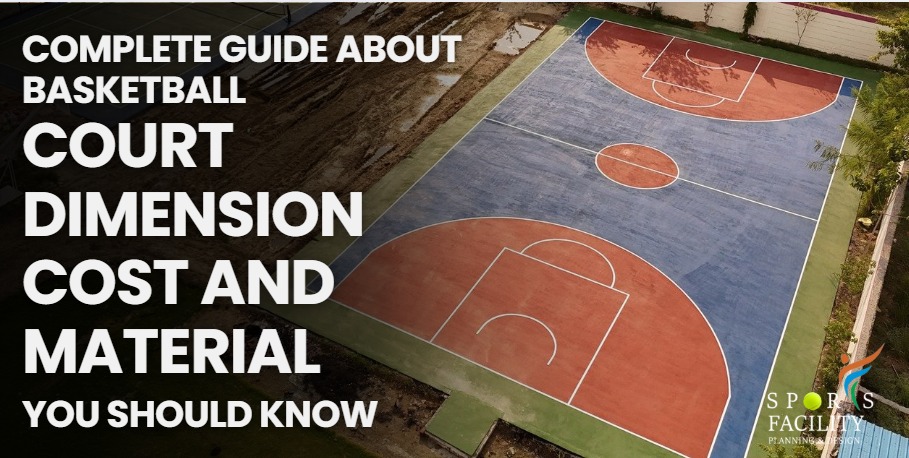
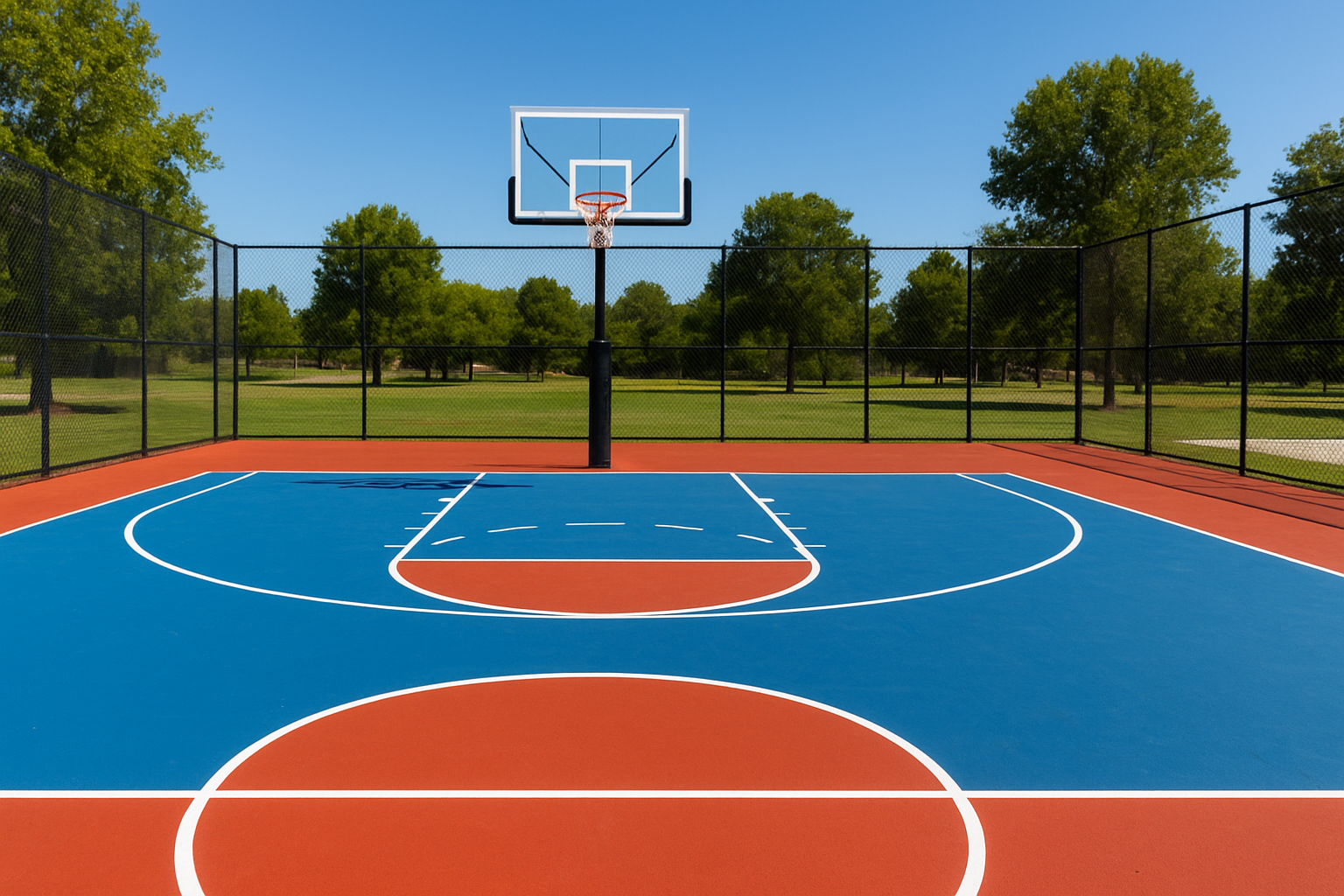
Acrylic sports flooring is a popular choice for outdoor basketball courts. It is generally applied over a properly prepared concrete or asphalt base and provides a consistent playing surface.
<Add suitable image of acrylic basketball court flooring here>
Key benefits:
- Available in different colours and finishes.
- Provides a suitable playing surface for outdoor basketball.
- Can be formulated with UV-resistant properties.
- Relatively easy to maintain.
- Suitable for schools, colleges, sports complexes, and recreational facilities.
Acrylic flooring is particularly useful for outdoor courts when the base preparation, coating system, and drainage are properly managed.
EPDM Rubber Basketball Court Flooring
EPDM rubber flooring is another option for outdoor sports facilities. It is made using synthetic rubber granules and is available in different thicknesses and colour combinations.
<Add suitable image of EPDM basketball court flooring here>
Key benefits:
- Offers a resilient playing surface.
- Provides cushioning depending on the system and thickness.
- Available in different colours.
- Suitable for selected outdoor recreational and sports applications.
- Can be designed for different weather conditions using appropriate materials and installation methods.
The quality of the rubber granules, binder, installation, and drainage should be considered before selecting an EPDM system.
Interlocking Sports Flooring
Interlocking sports tiles are designed to fit together through a connection system. They are used in several outdoor recreational and sports applications.
<Add suitable image of outdoor interlocking basketball court flooring here>
Key benefits:
- Modular installation.
- Individual tiles can be replaced when necessary.
- Allows water to pass through drainage channels in suitable tile designs.
- Available in different colours and surface patterns.
- Can accommodate thermal movement when properly designed and installed.
However, tile quality, subfloor preparation, drainage, and expansion provisions are important for reliable performance.
8. Importance of Proper Drainage in Outdoor Basketball Courts
No matter how good the flooring material is, poor drainage can reduce the overall performance and lifespan of an outdoor basketball court.
Rainwater should move away from the playing area rather than collect in low spots. This is why drainage planning should be included during the initial construction stage.
A properly constructed court generally includes a suitable slope, a stable base, and an effective system for directing rainwater away from the surface.
Before installing the final flooring, contractors should inspect the base to identify uneven areas, cracks, and potential water-collection points.
Good drainage offers several advantages:
- Reduces standing water after rainfall.
- Helps prevent moisture-related surface problems.
- Improves court usability after wet weather.
- Protects the underlying base.
- Reduces the need for frequent repairs.
Drainage should never be treated as an additional feature. It is a fundamental part of outdoor basketball court construction.
9. Regular Maintenance to Protect Basketball Court Flooring
Weather protection does not end once the flooring installation is complete. Regular maintenance is necessary to keep an outdoor basketball court in good condition.
Different seasons bring different maintenance requirements. During summer, the surface should be checked for fading and heat-related damage. During the monsoon, drainage and water accumulation should receive more attention.
A simple maintenance routine can help identify small issues before they become expensive repair problems.
Recommended outdoor basketball court maintenance checklist:
- Sweep the playing surface regularly.
- Remove leaves, dust, and other debris.
- Check drainage outlets before and during the rainy season.
- Inspect the surface for cracks, peeling, or loose tiles.
- Check court markings for fading.
- Avoid using harsh chemicals unless approved for the flooring material.
- Clean spills and stains using recommended cleaning methods.
- Arrange professional inspections when visible damage appears.
The frequency of maintenance will depend on weather exposure, court usage, flooring type, and installation quality.
10. Common Mistakes to Avoid When Installing Outdoor Basketball Court Flooring
Many flooring problems can be avoided by making the right decisions before construction begins.
Some common mistakes include:
1. Selecting indoor flooring for outdoor use
Indoor sports flooring is not automatically suitable for outdoor environments. Materials must be designed to withstand sunlight, rain, temperature changes, and other environmental conditions.
2. Ignoring drainage requirements
Poor drainage can result in water accumulation, slippery surfaces, and moisture-related damage.
3. Choosing flooring based only on price
Low-cost materials may not provide the durability or playing performance required for outdoor use. It is better to compare material quality, installation requirements, and maintenance costs.
4. Skipping proper base preparation
An uneven or weak concrete or asphalt base can affect the performance of the complete flooring system.
5. Neglecting regular maintenance
Even good-quality flooring requires cleaning, inspection, and timely repairs.
Avoiding these mistakes can help create a basketball court that remains functional and attractive over time.
11. Factors to Consider Before Selecting Outdoor Basketball Court Flooring
Before finalising a flooring system, consider the following factors:
- Local climate: Understand the area’s summer temperatures, rainfall, humidity, and seasonal changes.
- Court usage: Consider whether the court will be used for casual recreation, school activities, regular training, or competitive basketball.
- Player comfort: Look for suitable traction, surface consistency, and cushioning where required.
- Durability: Select materials designed for continuous outdoor exposure.
- Installation quality: Ensure the base preparation and flooring application follow the manufacturer’s recommendations.
- Maintenance requirements: Understand the cleaning and repair needs of the selected system.
- Available budget: Consider the overall project cost, including installation and long-term maintenance.
Taking time to evaluate these factors can help you select flooring that meets the actual requirements of your sports facility.
Conclusion
Weather conditions play a major role in the durability, safety, and performance of outdoor basketball court flooring. Continuous sunlight, heavy rainfall, high temperatures, humidity, cold weather, and dust can all affect the playing surface in different ways.
The best approach is to select flooring that is suitable for the local climate and ensure that the complete installation is carried out correctly. Proper base preparation, effective drainage, quality materials, and regular maintenance all contribute to a better outdoor basketball court.
Whether you are planning a new basketball court or upgrading an existing facility, investing in weather-appropriate flooring can help reduce maintenance issues and provide players with a reliable playing surface.
If you are looking for professional outdoor basketball court flooring solutions, choose a flooring system based on your site conditions, climate, and playing requirements. A well-planned court is not just about appearance; it is about creating a durable and comfortable sports facility that can support players throughout the year.
Frequently Asked Questions (FAQs)
1. Which flooring is best for outdoor basketball courts?
Acrylic sports flooring, EPDM rubber flooring, and outdoor interlocking sports tiles are commonly considered options. The right choice depends on the local climate, court usage, budget, and maintenance requirements.
2. Does sunlight damage outdoor basketball court flooring?
Yes. Continuous UV exposure can cause fading and gradual material deterioration. Choosing UV-resistant outdoor flooring materials can help minimise these effects.
3. Can heavy rain damage basketball court flooring?
Heavy rainfall can contribute to surface damage when drainage is poor or water enters the flooring system. Proper slope, drainage, and weather-suitable materials help reduce these problems.
4. How can I prevent water accumulation on an outdoor basketball court?
Ensure the court has an appropriate slope, a properly constructed base, and functional drainage outlets. Regularly remove leaves and debris that may block water flow.
5. Is EPDM flooring suitable for outdoor basketball courts?
EPDM flooring can be suitable for selected outdoor basketball applications when the material, binder, thickness, and installation system are designed for outdoor exposure.
6. How often should outdoor basketball court flooring be maintained?
Routine cleaning should be carried out regularly, while detailed inspections should be scheduled periodically and before or after seasons with heavy rainfall. Maintenance frequency depends on court usage and environmental conditions.
7. How long does outdoor basketball court flooring last?
Its lifespan depends on the flooring material, installation quality, weather exposure, usage, and maintenance. Following the manufacturer’s maintenance recommendations can help extend its service life.