

|
Getting your Trinity Audio player ready...
|
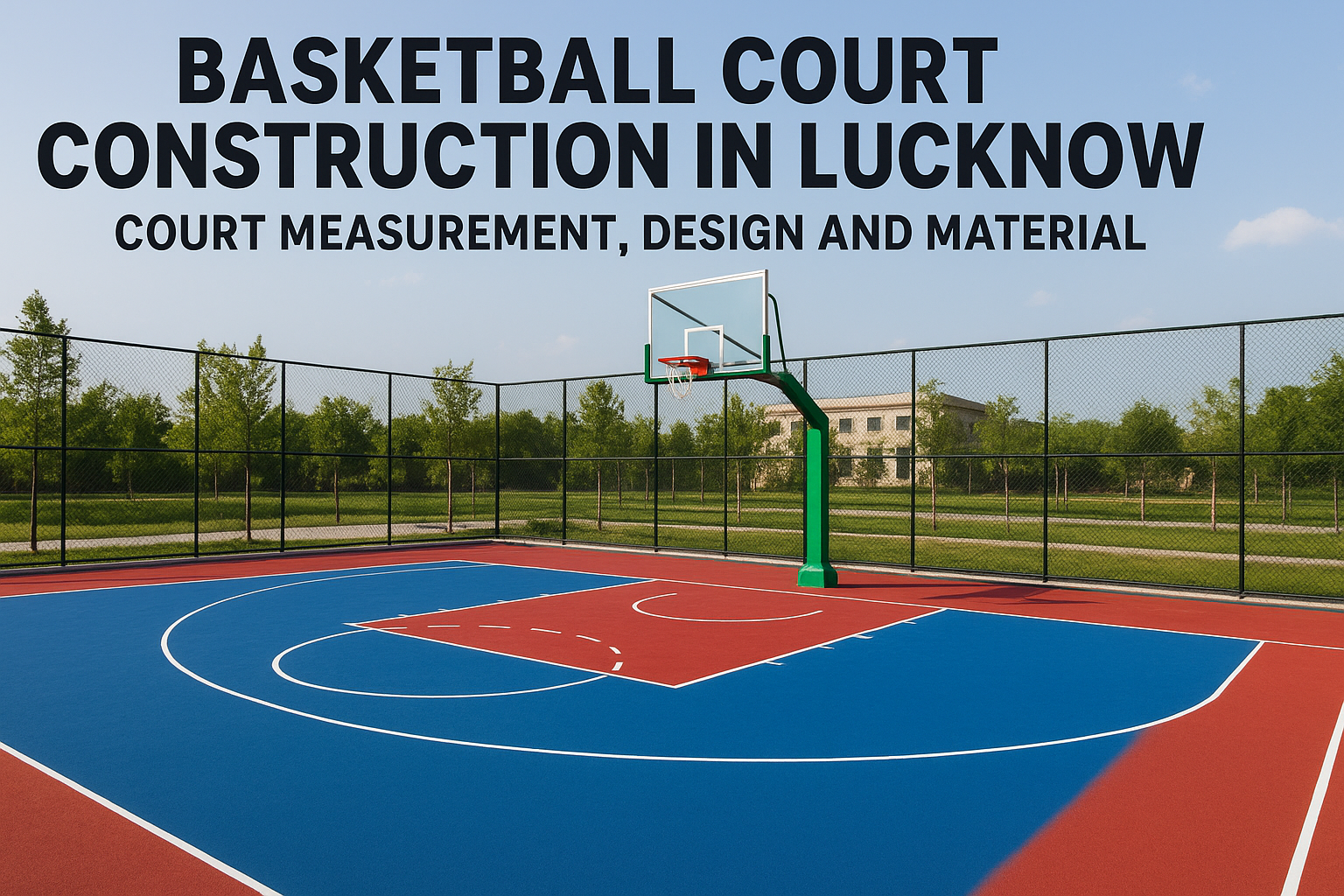
Building a basketball court is an exciting investment for schools, colleges, sports academies, residential societies, commercial sports facilities, and private properties. However, constructing a high-quality basketball court requires much more than installing a basketball hoop and preparing a flat surface. Proper planning, site preparation, flooring selection, drainage, lighting, court markings, and safety arrangements are all essential for creating a durable and professional playing area.
Whether you are planning an indoor basketball court or an outdoor basketball court, every construction stage should be completed carefully. Choosing the wrong flooring, ignoring ground conditions, or installing poor-quality equipment can result in expensive repairs and maintenance problems.
In 2026, basketball court construction projects are increasingly focusing on player safety, durable sports flooring, weather-resistant materials, and professional playing standards. A properly constructed court provides a comfortable playing experience, supports regular training, and remains functional for many years.
In this complete guide, we will explain everything you need to know before starting a basketball court construction project, including measurements, materials, construction processes, flooring options, estimated costs, maintenance requirements, and the final inspection checklist.
1. Decide the Purpose of Your Basketball Court
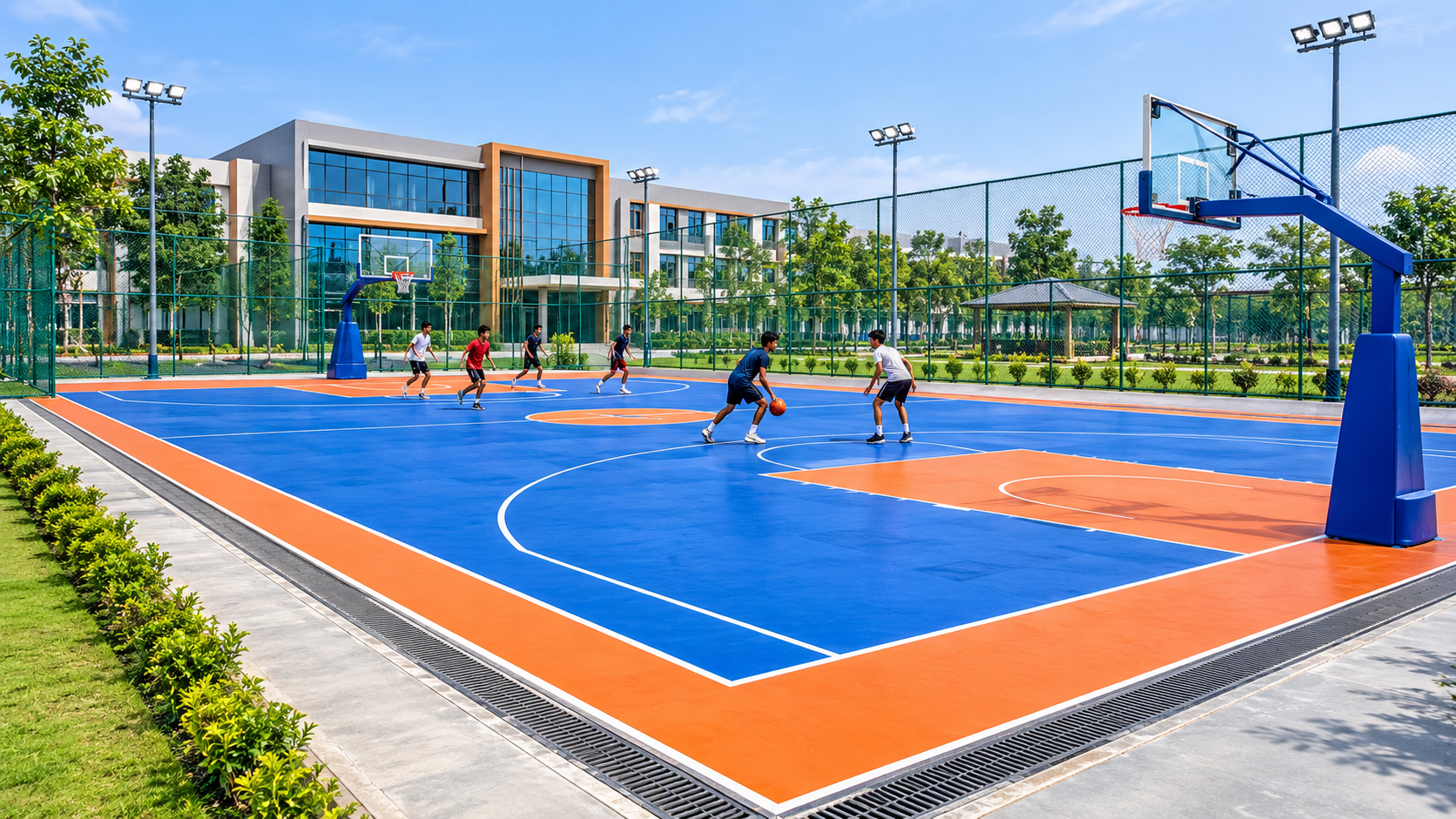
Before beginning construction, the first step is to understand why you need a basketball court. The purpose of the facility will influence its dimensions, flooring material, equipment, lighting, and overall construction budget.
For example, a professional basketball court requires specific playing dimensions and technical specifications, while a recreational court can be designed according to available space and user requirements.
Consider the following questions before starting:
-
Will the court be used for professional competitions or recreational games?
-
Do you need an indoor or outdoor basketball court?
-
Will children, adults, or professional players use the facility?
-
Do you require a full-size basketball court or a half court?
-
Will the facility be used for basketball training and coaching?
-
Do you need spectator seating and additional sports facilities?
-
What is your estimated construction budget?
Clearly defining these requirements will help you select the right construction approach and avoid unnecessary expenses.
2. Understand Standard Basketball Court Dimensions
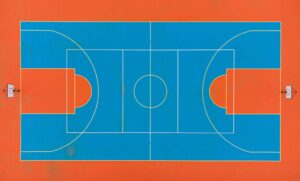
Basketball court dimensions are among the most important considerations during the planning stage. Accurate measurements ensure proper gameplay and help create a court that follows recognised basketball standards.
A standard FIBA basketball court measures 28 metres in length and 15 metres in width.
Here are some important basketball court measurements:
| Basketball Court Specification | Standard Measurement |
|---|---|
| Court length | 28 metres |
| Court width | 15 metres |
| Three-point line distance | 6.75 metres |
| Centre circle radius | 1.80 metres |
| Free-throw line distance from endline | 5.80 metres |
| Basketball ring height | 3.05 metres |
| Court marking width | 5 centimetres |
For a full-size court, additional safety clearance is also necessary. A recommended 2-metre unobstructed area around the playing court brings the overall floor area to approximately 32 metres × 19 metres.
If you are constructing a basketball court for professional tournaments, always verify the latest applicable FIBA requirements before finalising the design.
3. Select the Right Location for Construction
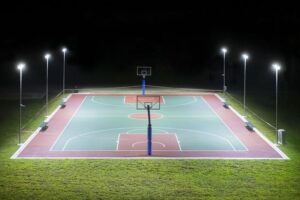
Selecting the right location can make a significant difference in the durability and usability of your basketball court.
The construction site should have sufficient space, suitable ground conditions, proper accessibility, and an effective drainage arrangement.
Before selecting the location, consider these factors:
-
Check whether the available land is sufficient for your planned court dimensions.
-
Avoid locations that experience frequent waterlogging.
-
Inspect the ground for uneven surfaces and weak soil.
-
Ensure easy access for construction vehicles and machinery.
-
Identify nearby buildings, trees, electric poles, and other obstacles.
-
Consider sunlight direction when planning an outdoor court.
-
Check the availability of electricity and water.
-
Ensure convenient access for players and visitors.
-
Verify local construction permissions and land-use requirements.
For outdoor basketball court construction, location selection is especially important because the playing surface will be exposed to sunlight, rain, dust, and changing weather conditions.
4. Conduct Soil Testing and Site Inspection
Soil testing is an essential step in building a long-lasting basketball court. The ground beneath the playing surface must be stable enough to support the construction layers and basketball equipment.
If the soil is weak or improperly compacted, the court may develop cracks, uneven areas, and settlement problems over time.
A professional site inspection should include:
Soil bearing capacity: Determines whether the existing ground can support the proposed construction.
Soil composition: Identifies clay, sand, silt, and other materials that may affect the foundation.
Groundwater conditions: Helps determine whether additional drainage arrangements are required.
Ground levels: Identifies uneven areas that need excavation or filling.
Soil compaction: Establishes the preparation required to create a stable construction base.
Before beginning construction, make sure the site has been inspected by a qualified civil engineer.
5. Prepare the Ground and Construct a Strong Base
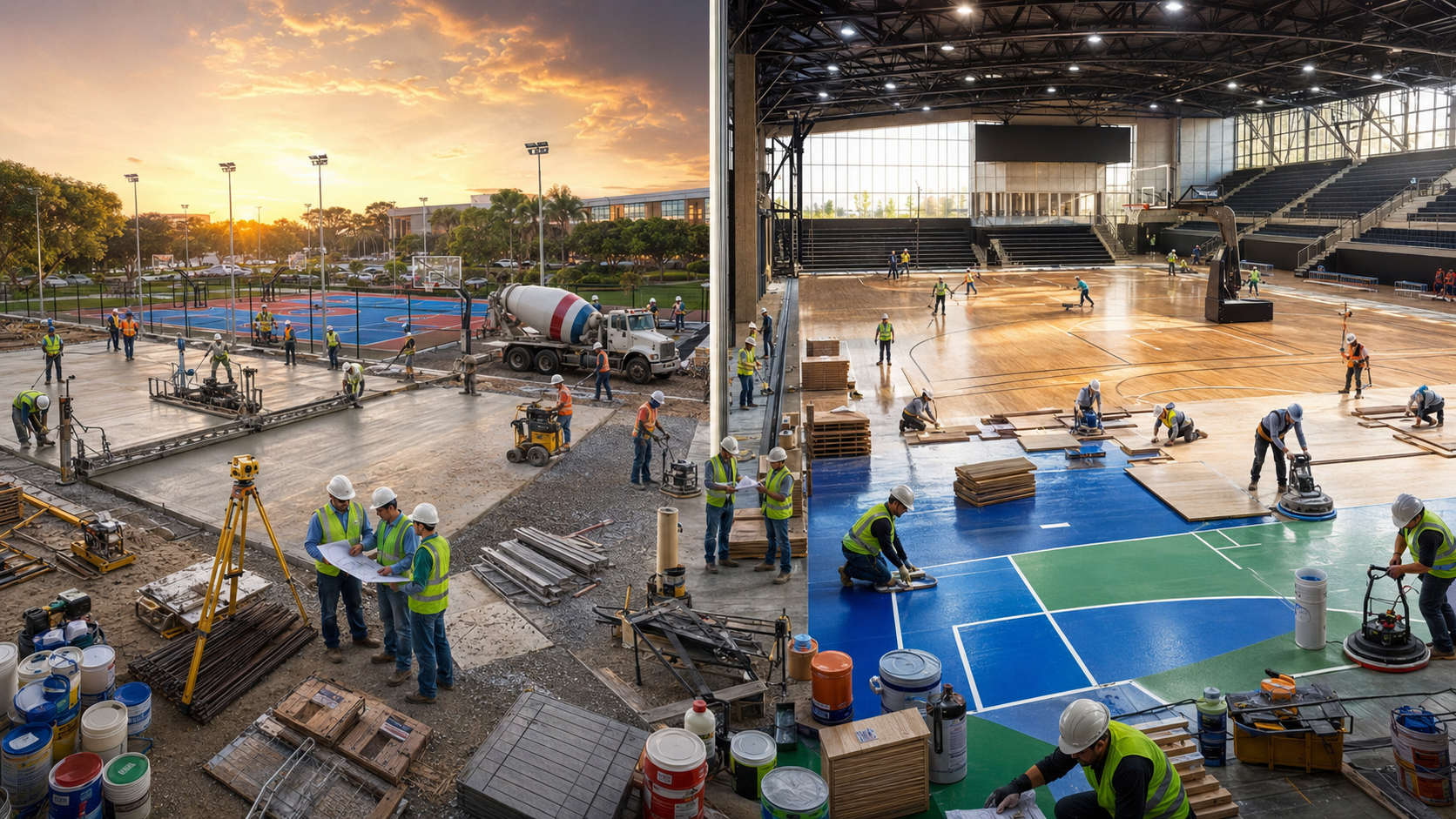
Ground preparation is one of the most important stages of basketball court construction. A strong and properly prepared base supports the sports flooring and helps maintain consistent playing conditions.
The construction process generally starts with removing grass, vegetation, loose soil, stones, and unwanted materials from the site.
After clearing the area, the ground is excavated, levelled, and compacted according to the approved engineering design.
The main ground preparation activities include:
-
Site clearing and removal of unwanted materials.
-
Excavation to the required depth.
-
Levelling of the construction area.
-
Compaction of the prepared soil.
-
Installation of the specified granular sub-base.
-
Construction of the concrete or asphalt base.
-
Inspection of surface levels and construction quality.
A properly prepared base helps reduce settlement, improves surface stability, and provides a suitable foundation for the selected basketball flooring system.
The base thickness, concrete specifications, reinforcement, and construction joints should always be determined according to actual site conditions.
6. Install a Proper Drainage System
Drainage is particularly important for outdoor basketball courts. Rainwater accumulation can damage flooring, encourage algae growth, and create slippery playing conditions.
A properly designed drainage system helps remove rainwater and protects the playing surface.
Important drainage considerations include:
-
Identify the natural direction of water flow.
-
Provide suitable surface drainage gradients.
-
Install perimeter drainage channels where necessary.
-
Ensure proper rainwater outlets.
-
Prevent surrounding water from entering the court.
-
Keep drainage channels free from debris.
-
Inspect the surface for unwanted water accumulation.
Avoid creating excessive slopes because basketball courts require a sufficiently level playing surface.
A professional contractor should prepare a drainage plan before beginning the base construction.
7. Choose the Best Basketball Court Flooring
Choosing the right flooring is one of the most important decisions in basketball court construction. The flooring directly affects player comfort, grip, ball bounce, maintenance, and the overall playing experience.
Different flooring materials are available for indoor and outdoor basketball courts. The best option depends on the intended use, weather conditions, available budget, and maintenance requirements.
Acrylic Sports Flooring
Acrylic sports flooring is one of the popular choices for outdoor basketball courts. It provides a consistent playing surface and is available in different colours.
Its major benefits include:
-
Weather-resistant surface systems.
-
Customisable colour combinations.
-
Suitable playing characteristics.
-
Relatively straightforward maintenance.
-
Compatibility with properly prepared concrete or asphalt bases.
Acrylic flooring is a practical option for schools, colleges, sports academies, and residential basketball courts.
Modular Sports Flooring
Modular sports flooring consists of interlocking tiles designed for sports applications.
Depending on the product specifications, these tiles may offer:
-
Easy installation.
-
Replaceable individual sections.
-
Outdoor weather resistance.
-
Integrated drainage features.
-
Different colour combinations.
Always choose sports-grade modular flooring with appropriate basketball performance specifications.
Wooden Sports Flooring
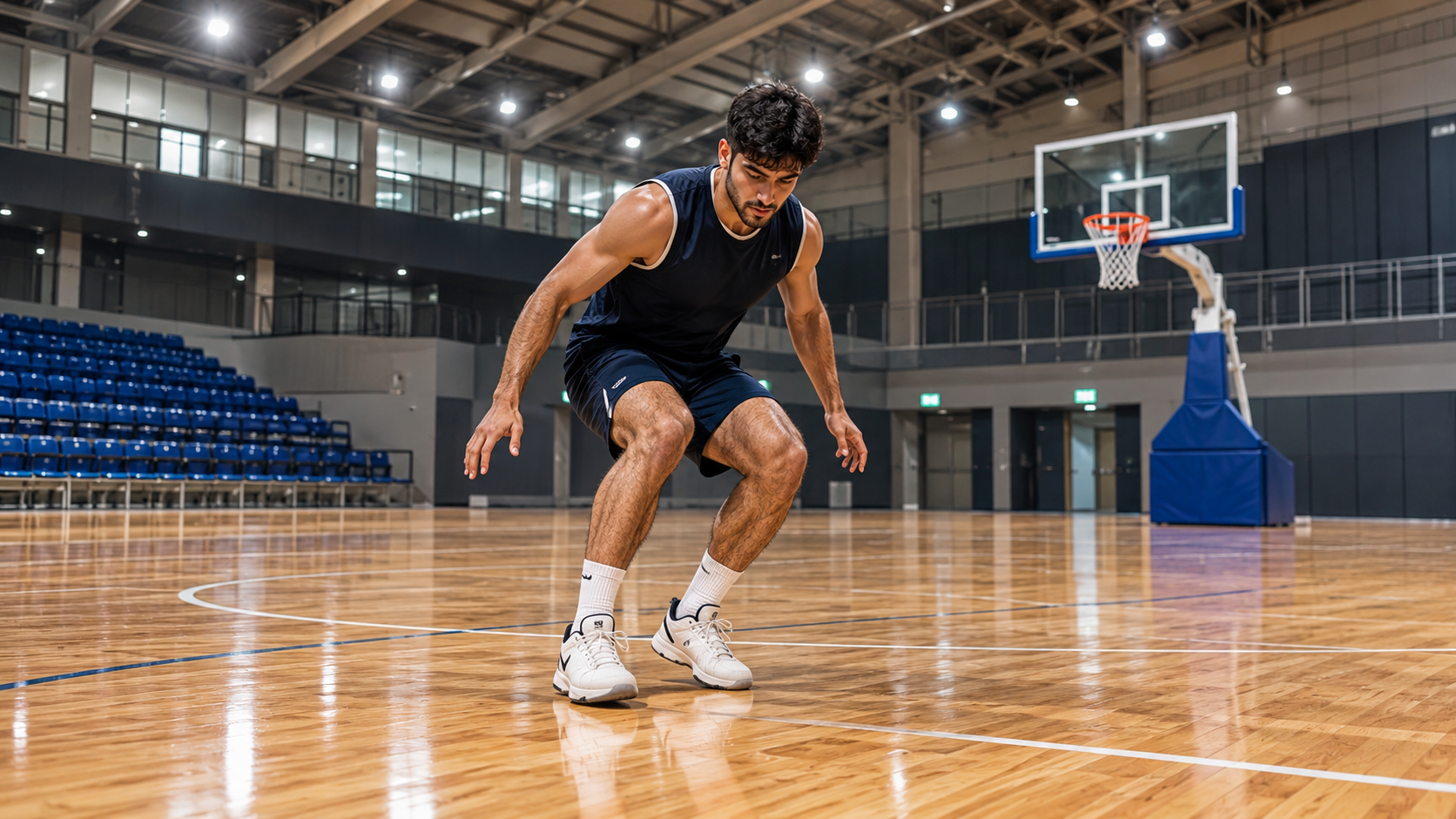
Wooden sports flooring is commonly used for indoor basketball courts and professional sports facilities.
It offers a traditional basketball playing experience and can provide suitable shock absorption when installed as a complete sports flooring system.
However, wooden flooring requires proper environmental control, specialised installation, and regular maintenance.
Rubber Sports Flooring
Rubber sports flooring can provide cushioning and impact absorption. It may be suitable for selected recreational and multipurpose sports facilities.
Before choosing rubber flooring, check whether the product is specifically designed for basketball rather than general gym or playground applications.
Important Flooring Selection Factors
Before finalising your flooring material, consider:
-
Surface grip and slip resistance.
-
Consistent basketball bounce.
-
Shock absorption.
-
UV resistance for outdoor applications.
-
Resistance to changing weather conditions.
-
Installation requirements.
-
Cleaning and maintenance.
-
Manufacturer warranty.
-
Overall project budget.
Never select basketball flooring based only on appearance or price. Always check the technical specifications and suitability of the material for your intended playing environment.
8. Install Accurate Basketball Court Markings
Court markings are essential for proper gameplay. All lines must be measured accurately and applied using suitable sports-grade marking paint or an approved marking system.
A standard basketball court includes several important markings:
-
Centre line.
-
Centre circle.
-
Three-point line.
-
Free-throw line.
-
Restricted area.
-
Two-point field goal area.
-
Sidelines.
-
Endlines.
-
No-charge semi-circles.
Proper marking improves the appearance of the court and ensures that players can follow the correct basketball rules.
Before applying the markings, the flooring should be completely prepared and suitable for the selected marking system.
Use professional measuring equipment and templates to achieve accurate dimensions and smooth curves.
9. Select Quality Basketball Hoops and Backboards
Basketball hoops and backboards are essential components of every basketball court. Their quality directly affects gameplay and player safety.
When selecting basketball equipment, consider the following:
Basketball backboard: Choose a suitable material and size according to the intended level of play.
Basketball rim: Select a durable rim designed for regular basketball use.
Support structure: Ensure the pole or supporting structure is properly engineered.
Foundation: Install the support system on a suitably designed concrete foundation.
Protective padding: Add safety padding around exposed structures where required.
Height adjustment: Consider adjustable basketball systems for schools and recreational facilities.
The standard basketball ring height is 3.05 metres above the playing surface.
Always use suitable outdoor-grade equipment for outdoor courts and ensure that installation is completed by experienced professionals.
10. Install Proper Basketball Court Lighting
Lighting is an important consideration for basketball courts that will be used during evening and night hours.
Poor lighting can affect visibility, player movement, and overall safety.
A professional lighting system should provide uniform illumination across the playing area.
Important lighting requirements include:
-
Install suitable LED floodlights.
-
Provide balanced illumination across the court.
-
Minimise glare for players.
-
Ensure sufficient lighting around basketball hoops.
-
Use weather-resistant outdoor lighting equipment.
-
Install proper electrical protection.
-
Provide convenient access for maintenance.
The required lighting level depends on whether the court is intended for recreational use, training, competition, or broadcasting.
For this reason, consult a lighting designer before selecting floodlights and installing electrical equipment.
11. Install Fencing and Safety Features
Safety should always be a priority when developing a basketball facility.
Outdoor basketball courts generally require suitable perimeter fencing to prevent balls from leaving the playing area and to protect nearby properties and pedestrians.
Important safety features include:
-
Strong perimeter fencing.
-
Secure entry and exit gates.
-
Protective padding around exposed structures.
-
Non-slip access pathways.
-
Proper electrical installations.
-
Clearly visible safety signage.
-
Suitable player and spectator areas.
-
First-aid arrangements.
-
Accessible entry facilities.
If the court is being constructed for a school, college, or public sports facility, also consider accessibility requirements for people with limited mobility.
12. Plan Additional Basketball Court Facilities
A professionally designed basketball facility should offer more than just a playing surface.
Additional facilities can improve player comfort, visitor experience, and the overall functionality of the sports complex.
Depending on your requirements, consider adding:
| Additional Facility | Main Benefit |
|---|---|
| Spectator seating | Comfortable viewing |
| Player benches | Resting space |
| Changing rooms | Player convenience |
| Washrooms | Hygiene and comfort |
| Drinking water | Hydration |
| Equipment storage | Safe equipment management |
| Scoreboard | Match score display |
| First-aid station | Emergency assistance |
| Waste bins | Clean surroundings |
| Directional signage | Easy navigation |
These facilities are particularly useful for sports academies, schools, colleges, and commercial sports centres.
13. Understand Basketball Court Construction Costs in 2026
Basketball court construction costs vary depending on the project size, construction location, soil conditions, flooring materials, equipment quality, and additional facilities.
In India, the total project budget can differ significantly between a basic recreational court and a professionally developed sports facility.
The major cost components include:
-
Site preparation and excavation.
-
Soil compaction and ground levelling.
-
Concrete or asphalt base construction.
-
Drainage system installation.
-
Basketball sports flooring.
-
Court markings.
-
Basketball hoops and backboards.
-
LED lighting and electrical work.
-
Perimeter fencing.
-
Additional facilities and safety equipment.
How to Prepare an Accurate Construction Budget
Before starting the project, request a detailed quotation from your basketball court construction contractor.
Your quotation should include:
-
Material specifications.
-
Flooring type and installation charges.
-
Civil construction expenses.
-
Equipment costs.
-
Labour charges.
-
Drainage and electrical expenses.
-
Transportation costs.
-
Applicable taxes.
-
Warranty and maintenance details.
It is also advisable to maintain a contingency budget for unexpected site conditions or additional construction requirements.
Remember that selecting the cheapest quotation is not always the best decision. Quality materials and professional installation can help reduce long-term maintenance expenses.
14. Perform Quality Checks Before Handover
Once the construction work is completed, a detailed inspection should be conducted before opening the court for regular use.
The final inspection helps identify defects and ensures that the facility is ready for basketball activities.
Use the following checklist:
It is also recommended to conduct a practical playing-surface inspection before officially opening the basketball court.
15. Create a Regular Basketball Court Maintenance Plan
Regular maintenance is essential for keeping a basketball court safe, attractive, and functional.
Without proper maintenance, even a professionally constructed court can develop surface damage, fading markings, drainage problems, and equipment issues.
Here are some important maintenance activities:
| Maintenance Activity | Recommended Frequency |
|---|---|
| Remove dust and leaves | Regularly |
| Clean the playing surface | As required |
| Inspect flooring for damage | Monthly |
| Check basketball hoops | Monthly |
| Inspect fencing | Quarterly |
| Clean drainage channels | Before and during rainy seasons |
| Check lighting fixtures | Periodically |
| Inspect support structures | At least twice yearly |
| Refresh court markings | As required |
The maintenance schedule should be adjusted according to the flooring manufacturer’s instructions, local weather conditions, and court usage.
A proper maintenance programme can help extend the useful life of your basketball court and reduce unexpected repair costs.
16. Common Basketball Court Construction Mistakes to Avoid
Many basketball court construction problems occur because important details are overlooked during the planning and installation stages.
Here are some common mistakes you should avoid:
1. Ignoring Soil Conditions
Constructing a court without understanding the soil conditions can lead to settlement, cracks, and uneven flooring.
2. Choosing Low-Quality Flooring
Inexpensive flooring may not provide the required grip, durability, or playing characteristics.
3. Poor Drainage Planning
Inadequate drainage can result in standing water and damage to the playing surface.
4. Incorrect Court Measurements
Incorrect dimensions and markings can make the court unsuitable for official competitions.
5. Using Poor-Quality Basketball Equipment
Weak support structures and improper installation can create serious safety risks.
6. Ignoring Lighting Requirements
Poor lighting can reduce visibility and limit the usability of the facility.
7. Skipping Final Inspections
Failing to inspect the completed court can allow construction defects to go unnoticed.
8. Not Planning for Maintenance
A court without regular maintenance may require expensive repairs much earlier than expected.
Avoiding these mistakes can help you develop a safer, more durable, and better-performing basketball facility.
17. How to Choose the Best Basketball Court Construction Company
Selecting the right basketball court construction company is essential for achieving quality results.
An experienced contractor should understand civil construction, sports flooring, court dimensions, drainage systems, equipment installation, and safety requirements.
Before hiring a company, consider the following points:
-
Check previous basketball court construction projects.
-
Review the company’s experience in sports flooring.
-
Ask about indoor and outdoor court construction capabilities.
-
Verify the quality of construction materials.
-
Check whether the company follows recognised sports specifications.
-
Request a detailed project quotation.
-
Ask about installation timelines.
-
Check warranty and after-sales support.
-
Request references from previous customers.
-
Compare technical specifications rather than focusing only on price.
A professional basketball court construction company should be able to explain every construction stage and recommend materials according to your site conditions and budget.
Conclusion
Building a basketball court requires proper planning, quality construction materials, professional installation, and regular maintenance. Every stage, from selecting the construction location and preparing the ground to installing sports flooring and basketball equipment, plays an important role in the final result.
Whether you are planning an outdoor basketball court for a school, an indoor basketball court for a sports academy, or a recreational court for a residential society, following a detailed construction checklist can help you avoid common mistakes and achieve better results.
Focus on strong foundations, effective drainage, suitable flooring, accurate markings, quality equipment, and player safety. These factors will help you create a basketball court that delivers a reliable playing experience and remains useful for years.
If you are planning a basketball court construction project in 2026, choose an experienced sports construction company that understands your requirements and can deliver a complete solution from initial planning to final installation.
Frequently Asked Questions About Basketball Court Construction
Q1. What is the standard size of a basketball court?
A standard FIBA basketball court measures 28 metres in length and 15 metres in width. Additional clearance should be provided around the playing area for player safety.
Q2. Which flooring is best for an outdoor basketball court?
Acrylic sports flooring and modular sports flooring are popular choices for outdoor basketball courts. The right option depends on weather exposure, budget, playing requirements, and maintenance needs.
Q3. What is the standard height of a basketball hoop?
The standard basketball ring height is 3.05 metres, measured from the playing surface to the top of the ring.
Q4. How much does basketball court construction cost in India?
The cost depends on court dimensions, site conditions, flooring materials, civil construction, drainage, lighting, and basketball equipment. A site inspection and detailed quotation are recommended for accurate pricing.
Q5. Can I construct a basketball court on an existing concrete surface?
Yes. An existing concrete surface can be used if it is structurally sound, stable, properly levelled, and suitable for the proposed sports flooring system.
Q6. Is acrylic flooring suitable for basketball courts?
Yes. Acrylic sports flooring is a popular choice for outdoor basketball courts because it offers a consistent playing surface, colour options, and relatively straightforward maintenance.
Q7. Why is drainage important for outdoor basketball courts?
Proper drainage prevents water accumulation, reduces slipping risks, protects the flooring, and helps maintain the usability of the court during rainy weather.
Q8. How long does basketball court construction take?
The construction timeline depends on the court size, ground conditions, weather, base preparation, flooring selection, and equipment installation. Your contractor can provide a realistic schedule after inspecting the site.
Q9. What materials are required for basketball court construction?
Common materials include granular sub-base materials, concrete or asphalt, sports flooring systems, marking paint, basketball hoops, backboards, fencing, lighting equipment, and drainage components.
Q10. How can I maintain an outdoor basketball court?
Regularly clean the surface, remove debris, inspect the flooring, check basketball equipment, maintain drainage channels, and repair any damage according to the flooring manufacturer’s recommendations.